


Your child is in primary school now — somewhere between Primary 1 and Primary 6. They've outgrown toddler craft tables but aren't ready for formal academy-style fine art classes. They can focus for longer, handle more complex materials, and have started developing real opinions about what they want to create. Choosing the right art class for this age range is genuinely different from choosing one for preschoolers. Here's what to look for.
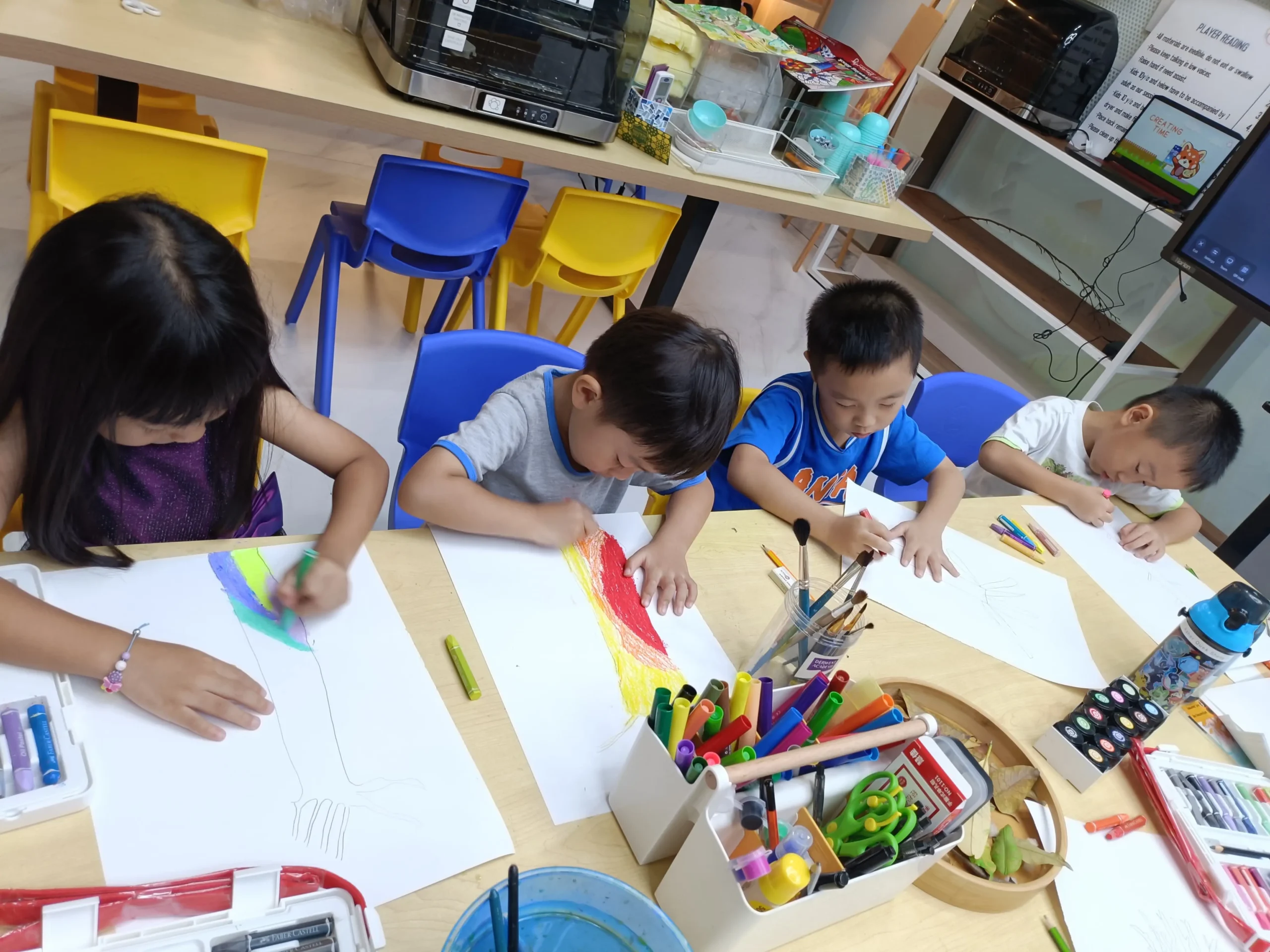
Primary school is a window where children shift from purely exploratory play into more intentional creative expression. They're no longer just finger-painting for the sensory joy of it — they want their artwork to mean something, to look like something, to be recognised. That shift changes what a good art class should offer them.
This guide covers the full picture: drawing, painting, and all the "beyond" — clay, mosaic, mixed media, 3D work, and more. We'll look at what's developmentally happening at this age, what art forms actually engage primary schoolers, the difference between a traditional art class and a creative workshop approach, and what to realistically expect over a few months.
According to Jean Piaget's stages of cognitive development, primary school children (roughly 7–11) are in the concrete operational stage. In practical terms, this means they can think logically about physical objects, understand cause and effect, plan projects in multi-step sequences, and handle symbolic representation (e.g., knowing that a drawing "stands for" something real). By upper primary (ages 10–12), many children are entering the formal operational stage, where abstract thinking becomes possible.
The National Association for the Education of Young Children (NAEYC) emphasises that at this age, children benefit most from learning environments that balance structure with creative autonomy — enough guidance to build skills, enough freedom to develop a personal voice.
- Focus on a single project for 60–90 minutes without losing engagement
- Follow multi-step creative instructions and sequence their own workflow
- Work with more complex materials — acrylic paint, clay tools, mosaic adhesives, 3D construction
- Plan a piece before starting rather than purely improvising
- Evaluate their own work and make intentional choices to refine it
- Take ownership of a theme and interpret it with a personal point of view
- Handle feedback — provided it's encouraging, not harsh — and apply it
This is why a class designed for 4-year-olds will feel too shallow for a 9-year-old, and a class designed for teenagers will feel too rigid for a Primary 2 child. Age-appropriate grouping matters enormously at this stage.
Before we get into specific art forms, it's worth understanding the two main styles of programmes available to primary school kids in Singapore. They're not better or worse — they serve different goals.
- Syllabus-based with progressive skill-building
- Teacher-led technique instruction (e.g., shading, proportion)
- Fixed weekly schedule, term commitment
- Usually focused on drawing and painting
- Suits children preparing for DSA portfolios or formal art pathways
- Progression measured by improving technique over time
- Theme-based with weekly rotating projects
- Child-led exploration with teacher guidance
- Flexible scheduling, no term lock-in
- Wide variety: drawing, painting, clay, mosaic, mixed media, 3D
- Suits children who want creative exploration and variety
- Progression measured by confidence, creative voice, and completed work
For most primary school children — unless they're specifically preparing for DSA or a formal art pathway — the creative workshop approach works well. It keeps art fresh, varied, and enjoyable at an age when rigid academic learning already dominates their weekdays. Some families do a mix: structured drawing lessons for technique plus creative workshops for variety.
For a deeper comparison, read our guide on art class vs art workshop — which is better for your child.
Here are the art forms that work especially well for primary school children in Singapore. The best programmes offer variety across several of these rather than focusing on just one.
Drawing is the foundation of visual art, and primary school is when children genuinely start improving. At this age, they move from symbolic "tadpole people" to more accurate proportions, perspective awareness, and detail observation. Good drawing programmes introduce concepts gradually — light and shadow, negative space, gesture drawing — without overwhelming the child. Pencil, charcoal, ink, and coloured pencils all work well.
Drawing also supports academic skills: observation, analytical thinking, and focus carry over into subjects like science and geography.
Best for: Children who enjoy detail, patience, and skill progression. Great foundation for DSA portfolios.
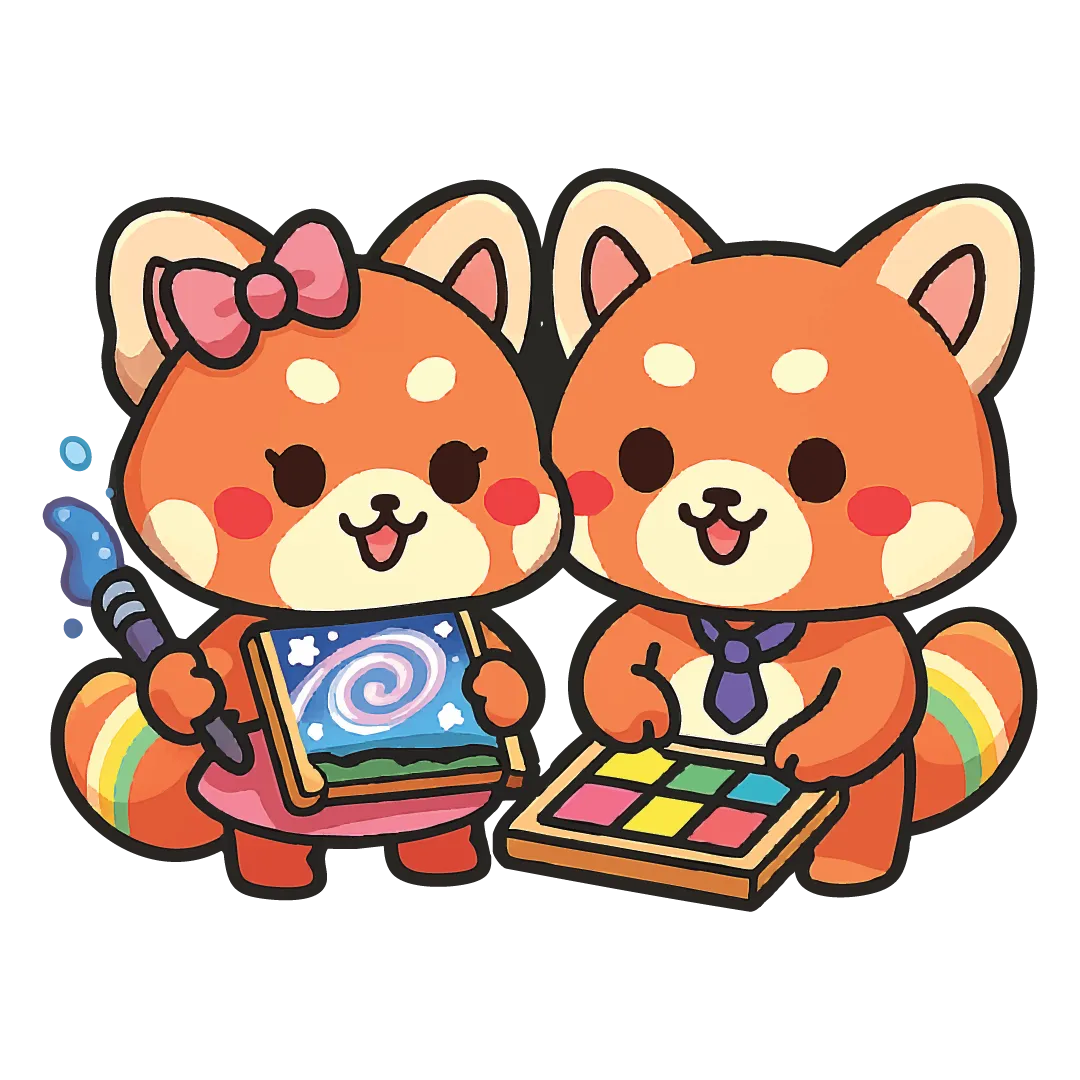
By primary school, children can genuinely handle real canvas and acrylic paints — not just washable kids' paints on paper. This matters more than it might sound. A 9-year-old painting on a proper canvas with artist-grade paints takes their work more seriously and produces results they're genuinely proud of. Canvas painting also introduces colour theory, layering, blending, and composition in a hands-on way.
At Art Journey, canvas painting sessions are among the most popular for primary school kids. Themes change regularly — from fantasy landscapes to still life to abstract exploration — so children never get bored.
Best for: Children who love colour and want a "real" art experience. Works for ages 7 right through to teens.
Clay is fantastic for primary school kids because it combines creativity with physical, tactile work. It develops fine motor control, spatial reasoning, and patience — and the results are genuinely impressive. Children can build characters, miniature scenes, functional pieces like bowls and coasters, or abstract sculptures. Air-dry clay works well for studio sessions since it doesn't require kilns.
Clay is also an emotional workhorse — the act of shaping and reshaping is calming, and children who struggle with perfectionism often relax more with clay than with drawing. Clay art sessions at Art Journey are popular with kids aged 7 and above.
Best for: Tactile learners. Children who love building and making 3D things. Great for kids who find drawing intimidating.
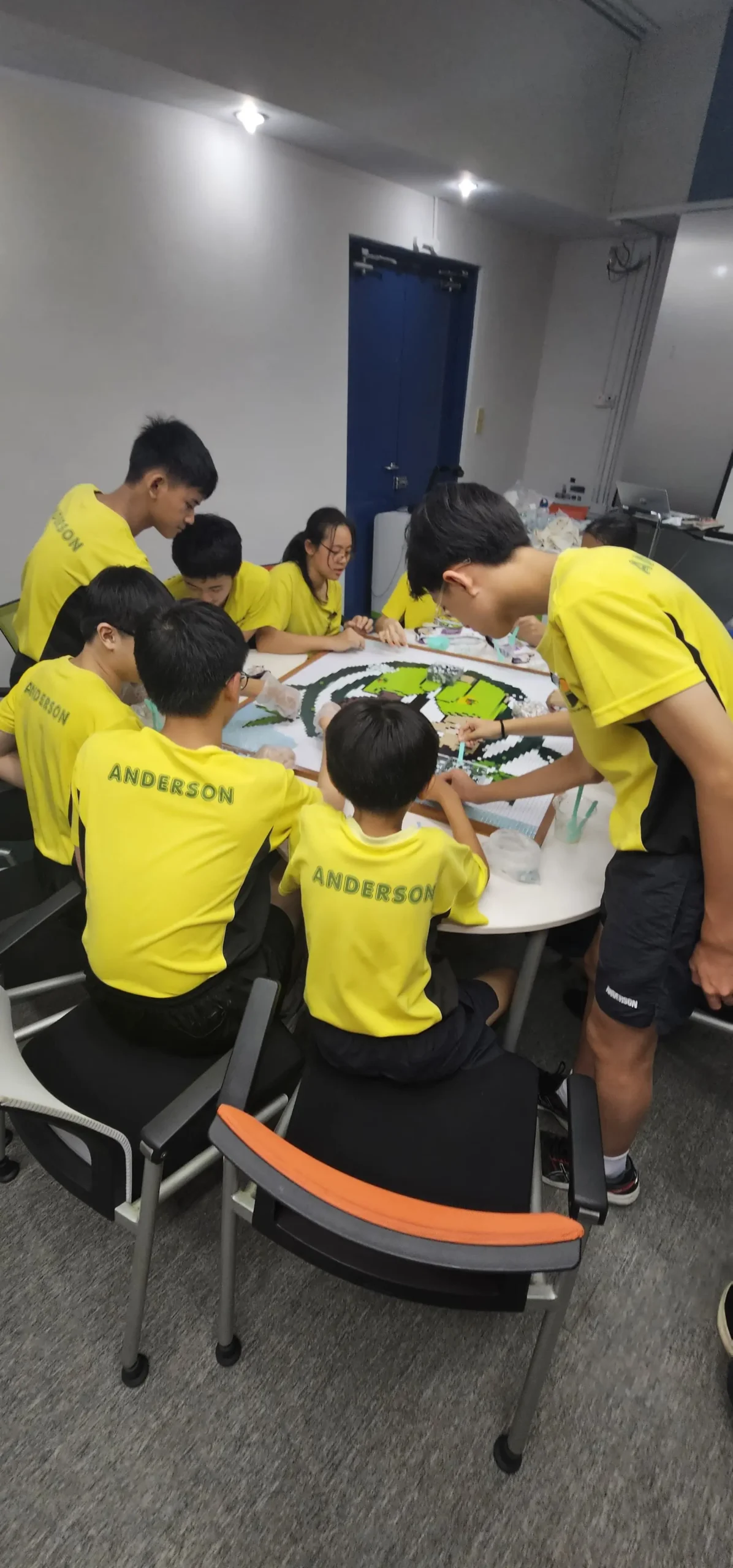
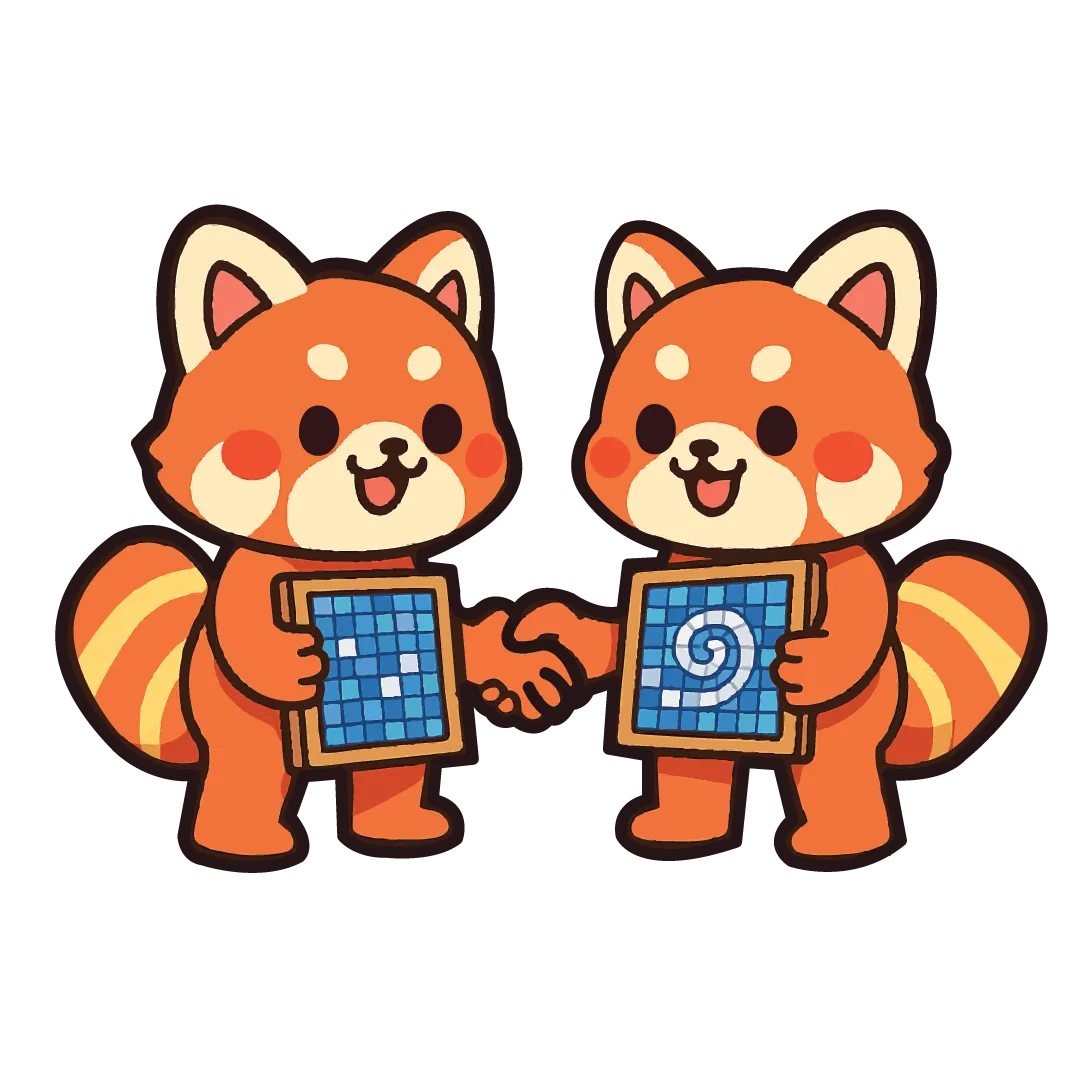
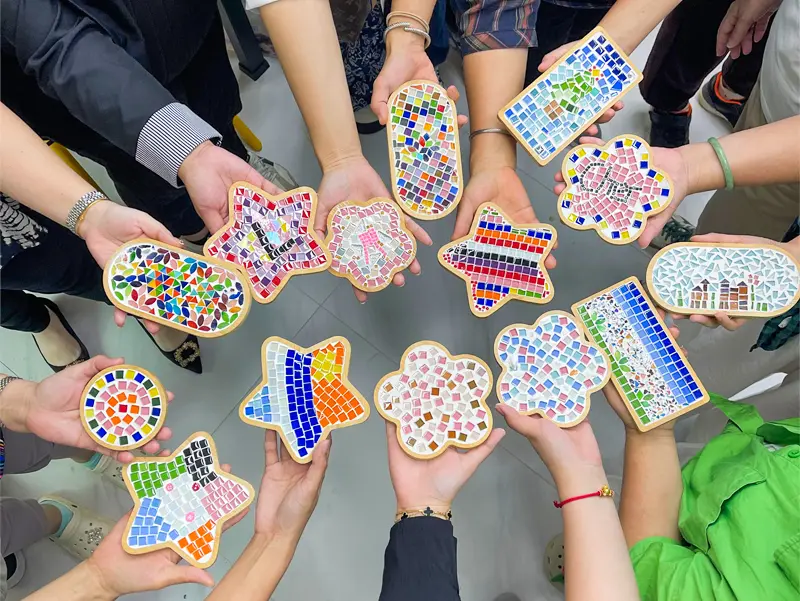
Mosaic is surprisingly underrated for primary school kids. It teaches patience and planning — children have to decide on a design, select colours, arrange tiles, and commit to gluing them down. The result is always impressive, which builds confidence. Mosaic also doesn't require drawing skill, so children who think they "can't draw" often produce beautiful mosaic work and rediscover their creative confidence.
Projects can be practical — coasters, picture frames, small trays — or decorative. Mosaic art at Art Journey is especially popular for the 7–12 age group because the pieces are finished and functional.
Best for: Children who enjoy planning and finishing. Good for kids who find freeform art stressful.
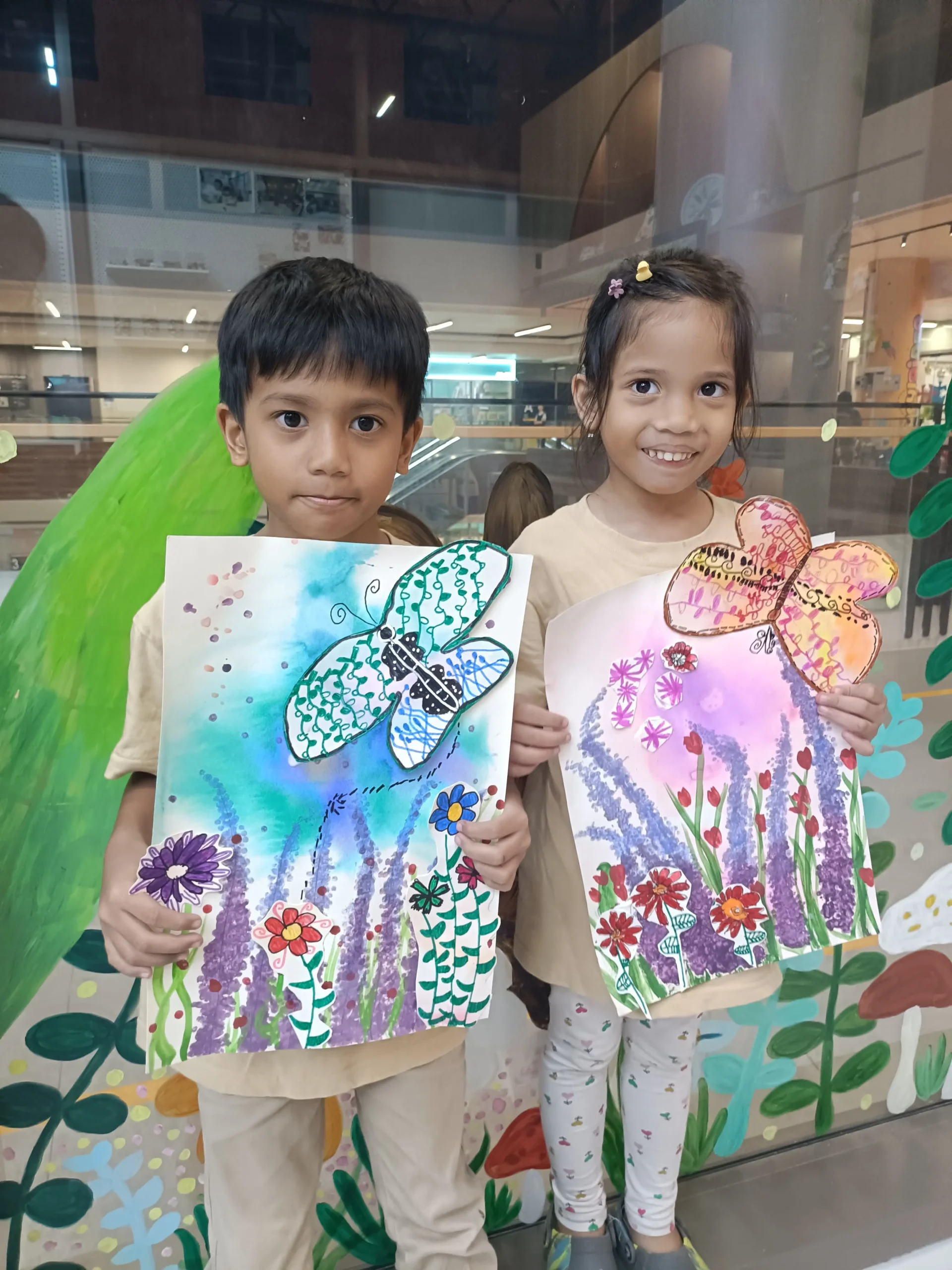
Mixed media combines drawing, painting, collage, and craft elements into a single piece. Primary school kids love this because there are no rules — they can glue, cut, paint, layer, stamp, and experiment freely. It's also wonderful for developing creative problem-solving: when a project involves five different materials, children learn to make decisions about composition, balance, and storytelling.
Mixed media is particularly good for children who get bored with a single medium. Instead of "we're doing drawing today," it's "we're making a piece that has drawing, painting, fabric, and found objects in it."
Best for: Imaginative kids. Children who love variety. Excellent for developing creative decision-making.
This one's an Art Journey specialty. Children select a blank figurine — animals, cartoon characters, mini statues — and paint it with acrylic paints. It's a bridge between canvas painting and clay sculpture, and it's particularly engaging for kids who love a "finished product" feel. The painted figurines look great on a shelf, and children often get deeply absorbed in the detail work.
3D figurine painting works especially well for children who may not love traditional painting but enjoy collecting, decorating, and making finished objects.
Best for: Kids who love collecting, games, or character-based creativity. Often a hit with boys who may resist canvas painting.
Sand art involves layering coloured sand into glass bottles or containers to create patterns and scenes. It's unusual, sensory, and produces keepsakes children are genuinely proud of. Bottle painting — painting directly onto glass bottles as decorative objects — is a related activity that builds 3D thinking and patience.
These formats are great palate cleansers between more traditional art activities. Sand art workshops at Art Journey give primary school kids the chance to try something their friends probably haven't.
Best for: Children who want variety. Great as a "try something different" session.
Primary school in Singapore is academically intense. By Primary 4 or 5, many children are juggling tuition, enrichment, and PSLE preparation. It's tempting to see art as "just a hobby" — a nice-to-have but not essential. That thinking misses how much art actually supports a child's development during these years.
A note on screen time: Many parents find that a weekly art session reduces the amount of time their primary schooler spends on screens. It gives them something to look forward to, something to talk about, and something to show for their effort — all in a way that scrolling never does.
Art Journey's workshops are organised into two main age groups: Young Creator (ages 4–7) and Emerging Artist (ages 8–12). The Emerging Artist programme is specifically designed for primary school children — upper primary in particular — who are ready for more nuanced materials, longer sessions, and themes that challenge their thinking.
The studio is located at Plantation Plaza in Jurong West, open daily 10am–9pm, and accessible by Bus 870 from Jurong East MRT / JEM. Parents can drop off their child for a 2-hour session while browsing nearby or working at the on-site Art Cafe.
Age-appropriate grouping. Your Primary 2 child should not be in the same class as a Primary 6 child expecting portfolio-level work. Look for studios with clear age splits (7–8, 9–10, 11–12, or a broader 8–12 group).
Variety of art forms. A studio that only teaches drawing may be fine for children committed to that specific path, but most primary schoolers thrive with variety. Drawing, painting, clay, mosaic, and mixed media together make a well-rounded creative diet.
Session length of 90–120 minutes. Primary school children can handle longer sessions than preschoolers. Sessions under an hour often feel rushed; sessions over two hours can lead to fatigue. 90 minutes to two hours is the sweet spot.
Teacher approach. The best teachers for this age group balance technique instruction with encouragement of personal voice. Avoid classes where every child's work looks identical — that's template-copying, not art education.
Flexibility to fit schedules. Primary school kids in Singapore have packed schedules. A studio that offers individual session bookings rather than rigid term commitments is often more practical.
A trial session. Any good studio will let you book a single session before committing. Use it. Observe whether your child is engaged, whether they talk about their session afterwards, and whether they want to come back.
For related reading, our earlier guide on creative workshop activities for primary school students covers school-organised programmes, and our drawing class for kids Singapore guide goes deeper on drawing-specific lessons.
Art Journey's Emerging Artist programme (ages 8–12) covers drawing, painting, clay, mosaic, mixed media, and more — one session at a time. No term lock-in. Open daily 10am–9pm.
Book a TrialPrimary school in Singapore runs from Primary 1 to Primary 6, covering ages 7 to 12. Art programmes for this age range often split into lower primary (7–9) and upper primary (10–12), or a broader 8–12 group. At Art Journey, the "Emerging Artist" programme is designed for ages 8–12, with the "Young Creator" programme covering 4–7 year olds.
Most primary school children can focus well for 90 minutes to 2 hours. Shorter sessions (under an hour) often feel rushed and don't allow for deep creative engagement. Longer sessions (over 2 hours) can cause fatigue unless they include natural breaks. 90–120 minutes is ideal for most projects.
Yes — especially in a programme that offers variety beyond drawing. Many children label themselves "bad at drawing" after comparing their work to older children's. A good creative workshop that includes clay, mosaic, mixed media, and 3D work gives them success experiences in formats where they feel more confident. That success often rebuilds their confidence in drawing too.
Art classes are typically syllabus-based with progressive technique instruction — good for children pursuing formal art pathways or DSA portfolios. Creative workshops are theme-based, cover a wider range of art forms (drawing, painting, clay, mosaic, etc.), and emphasise personal expression over technique. For most primary school children, a creative workshop approach works well. Some families combine both.
Once a week is ideal for consistent creative growth. If schedules are tight, fortnightly sessions still provide meaningful benefit. Daily practice isn't necessary at this age — the quality and variety of experience matter more than frequency.
Yes, particularly for children targeting art-focused secondary school programmes. Structured drawing classes help build technical skill and a body of work. Creative workshops add variety and personal voice — both valued by admissions panels. Starting by upper primary (Primary 4 onwards) gives your child enough time to build a portfolio that reflects genuine growth.
Yes. Art Journey's "Emerging Artist" programme is designed for ages 8–12 — covering drawing, painting, clay art, mosaic, mixed media, 3D figurine painting, and sand art. Sessions run approximately 2 hours, with themes rotating weekly. No term commitment required — parents can book individual sessions or packages.