











Your child is 4, maybe 5, maybe just turned 6. They love drawing on everything — walls, napkins, the back of your important documents. You're thinking about signing them up for an art class, but when you search online, you find hundreds of options and no clear way to tell what's actually good for a child this age. This guide is for you.
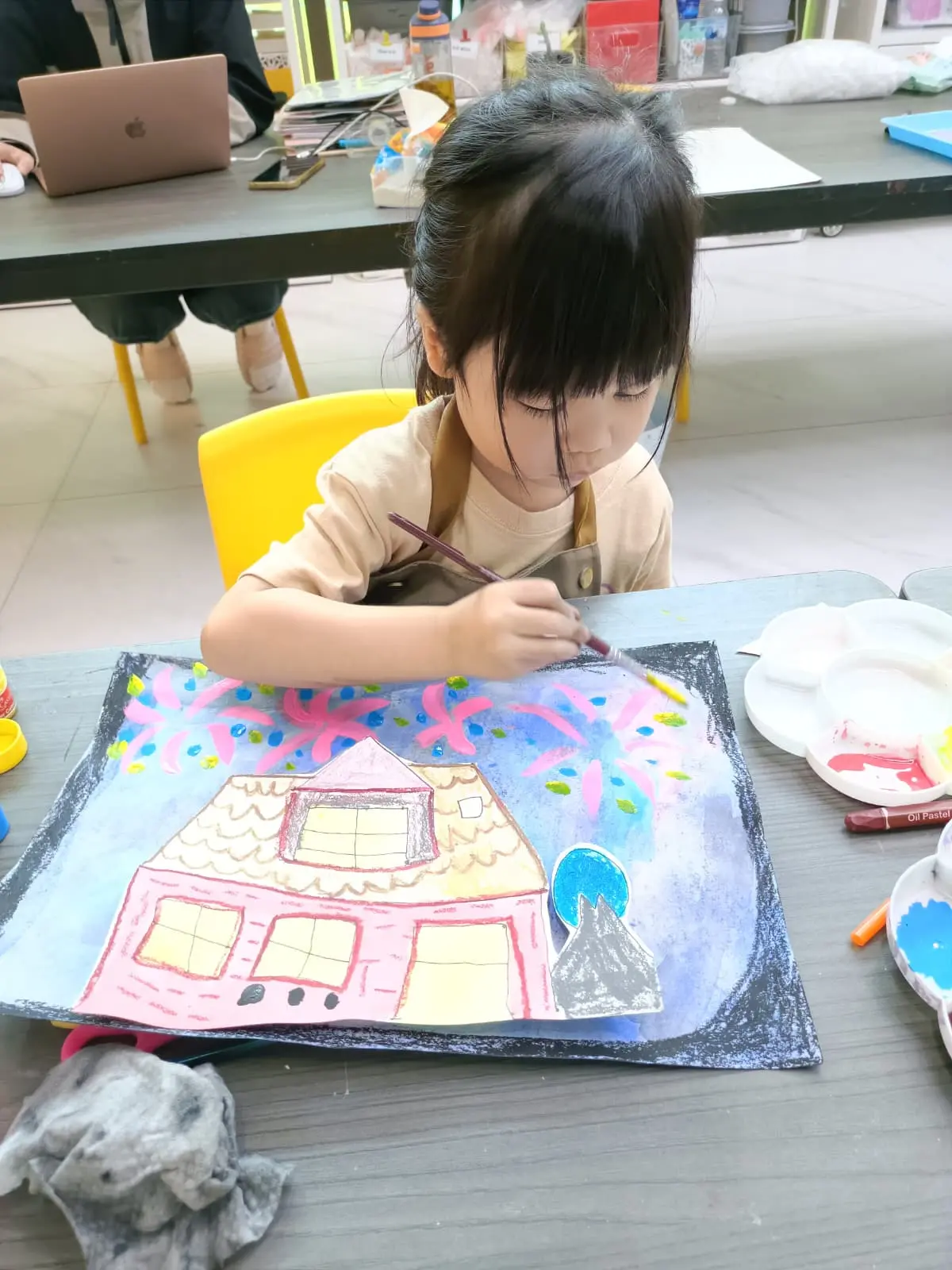
The 4 to 6 age range is a fascinating stage of development. Children this age are bursting with imagination, but their fine motor skills are still catching up to their ideas. They can hold a brush but not always control it precisely. They have strong opinions about what they want to create, but they may get frustrated when their hands can't match their vision. The right art class meets them exactly where they are — and the wrong one can actually put them off art for years.
Here's what you need to know before choosing.
Understanding your child's developmental stage helps you evaluate whether a class is genuinely age-appropriate — or just marketed that way. According to Jean Piaget's stages of cognitive development, children aged 4 to 6 are in the preoperational stage, which means they think in symbols, engage in imaginative play, and learn primarily through hands-on experience rather than abstract instruction. The National Association for the Education of Young Children (NAEYC) emphasises that learning at this age should be play-based, sensory-rich, and driven by the child's interests.
In practical terms for art, here's what that means:
- They can hold a brush, crayon, or marker and make deliberate marks — but fine control is still developing
- They can choose colours with intention and have strong preferences about what they like
- They can follow a simple creative prompt — "paint something from the ocean" — and interpret it in their own way
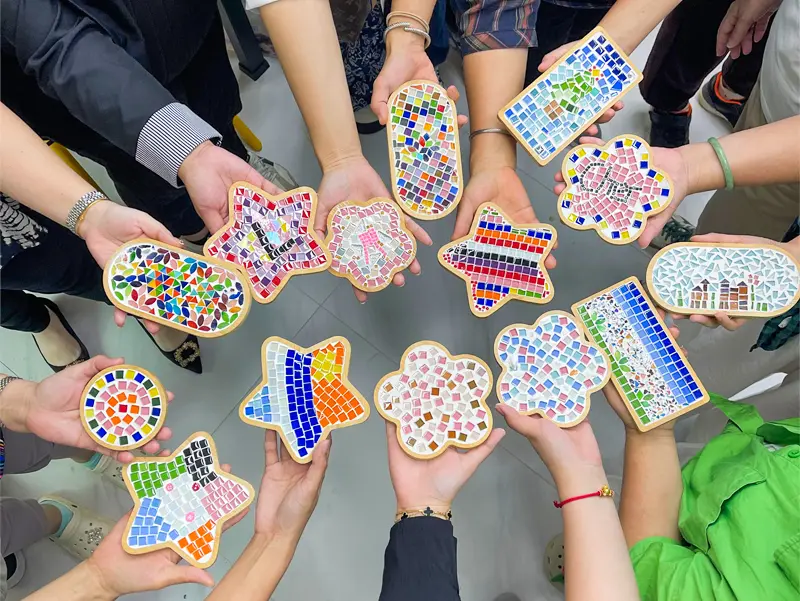
- They can work with clay, sand, mosaic tiles, and textured materials — and often prefer these over flat drawing
- They can't sit still for more than 30–45 minutes on a single focused task
- They can't follow multi-step technical instructions like shading, perspective, or realistic proportion
- They can't always articulate what they're making — and they shouldn't have to
This is why a class designed for 8-year-olds doesn't work for a 4-year-old, even if the studio says "ages 4 and above." The activities, pacing, attention span expectations, and teaching approach need to be fundamentally different.
Not every art class that accepts 4-year-olds is actually designed for them. Here's a quick way to tell the difference:
- Every child's artwork looks identical — template-copying approach
- Heavy focus on "correct" technique for young children
- Sessions longer than 90 minutes with no breaks
- Only pencil, paper, and paint — no variety in materials
- Grading, scoring, or competitive comparisons
- Teachers correcting children's work to make it "better"
- Minimum age of 4 but curriculum designed for 7+
- Each child's work looks different — personal interpretation encouraged
- Focus on exploration, expression, and sensory engagement
- Sessions of 60–90 minutes with natural transitions between activities
- Variety of materials: clay, mixed media, sand, mosaic, paint, 3D elements
- No grading — encouragement and celebration of effort
- Teachers guide without taking over
- Specific age grouping (e.g., 4–7 separate from 8–12)
The most important factor. A 4-year-old in a mixed class with 10-year-olds will either be bored, frustrated, or lost. Look for studios that deliberately separate younger children (4–7) from older ones (8–12). This allows the teacher to pace the session, choose appropriate materials, and set expectations that match what younger children can actually do.
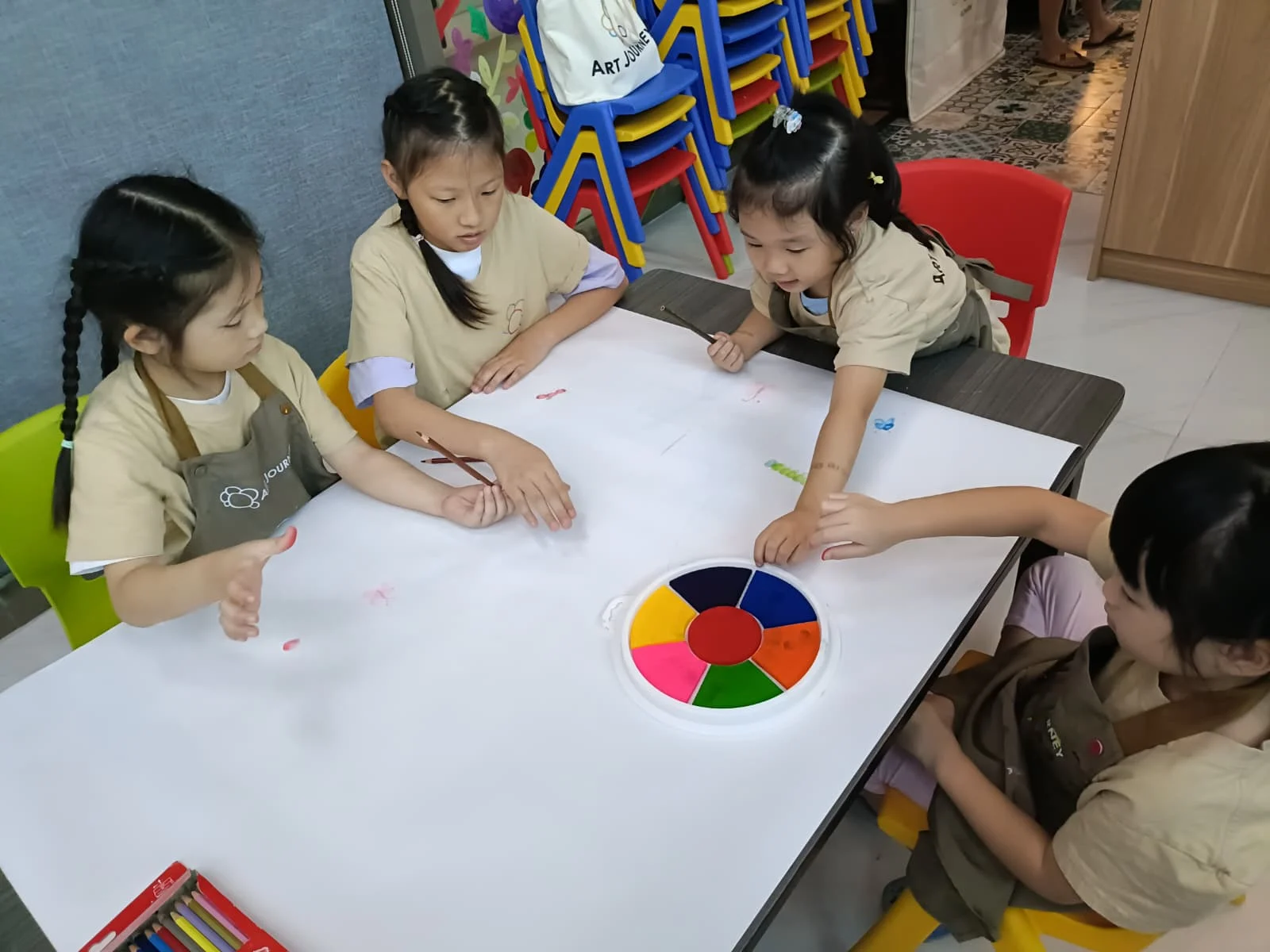
At Art Journey, the "Young Creator" group (ages 4–7) runs separately from the "Emerging Artist" group (ages 8–12). The activities, themes, and level of guidance are tailored to each group.
Children aged 4–6 learn best through their senses — touching, squishing, stacking, arranging. A class that only uses pencils and watercolour is missing a huge opportunity. The best programmes for this age group incorporate clay, sand, mosaic tiles, tin foil, mixed media, cardboard, fabric, and 3D elements. These tactile materials keep young children engaged far longer than flat surfaces.
This is one of the reasons parents choose Art Journey's workshops — the variety of materials means a child might work with clay one week and build with recycled materials the next. That variety prevents boredom and supports different aspects of fine motor development.
At 4–6, children don't need to learn shading, perspective, or colour theory. They need creative prompts that spark their imagination. Theme-based sessions — animals, underwater worlds, space, festivals, storybook characters — give children a starting point while leaving room for personal interpretation. Every child responds to the same theme differently, and that's exactly the point.
A good class changes themes regularly to keep things fresh. If your child comes home talking about what they made and what it means, the class is working.
Watch how the teacher interacts with the children. A good teacher for 4–6 year olds does not stand at the front demonstrating what to draw. Instead, they circulate, ask questions ("What's happening in your picture?"), offer encouragement, and help with practical things like mixing colours or holding tricky materials. The child leads; the teacher supports.
This is the difference between a traditional art class and a creative workshop approach. For younger children, the workshop model — inspired by Reggio Emilia and Montessori principles — is almost always a better fit.
For 4-year-olds, anything beyond 60 minutes is pushing it unless the session includes natural breaks and activity transitions. By 5–6, children can manage 75–90 minutes if the session is well-paced — perhaps starting with a story or theme introduction, moving into creating, and ending with a reflection or show-and-tell moment.
If a class advertises 2-hour sessions for 4-year-olds with no breaks, that's a red flag. Attention span at this age is roughly 15–20 minutes per focused activity. Good classes build in transitions.
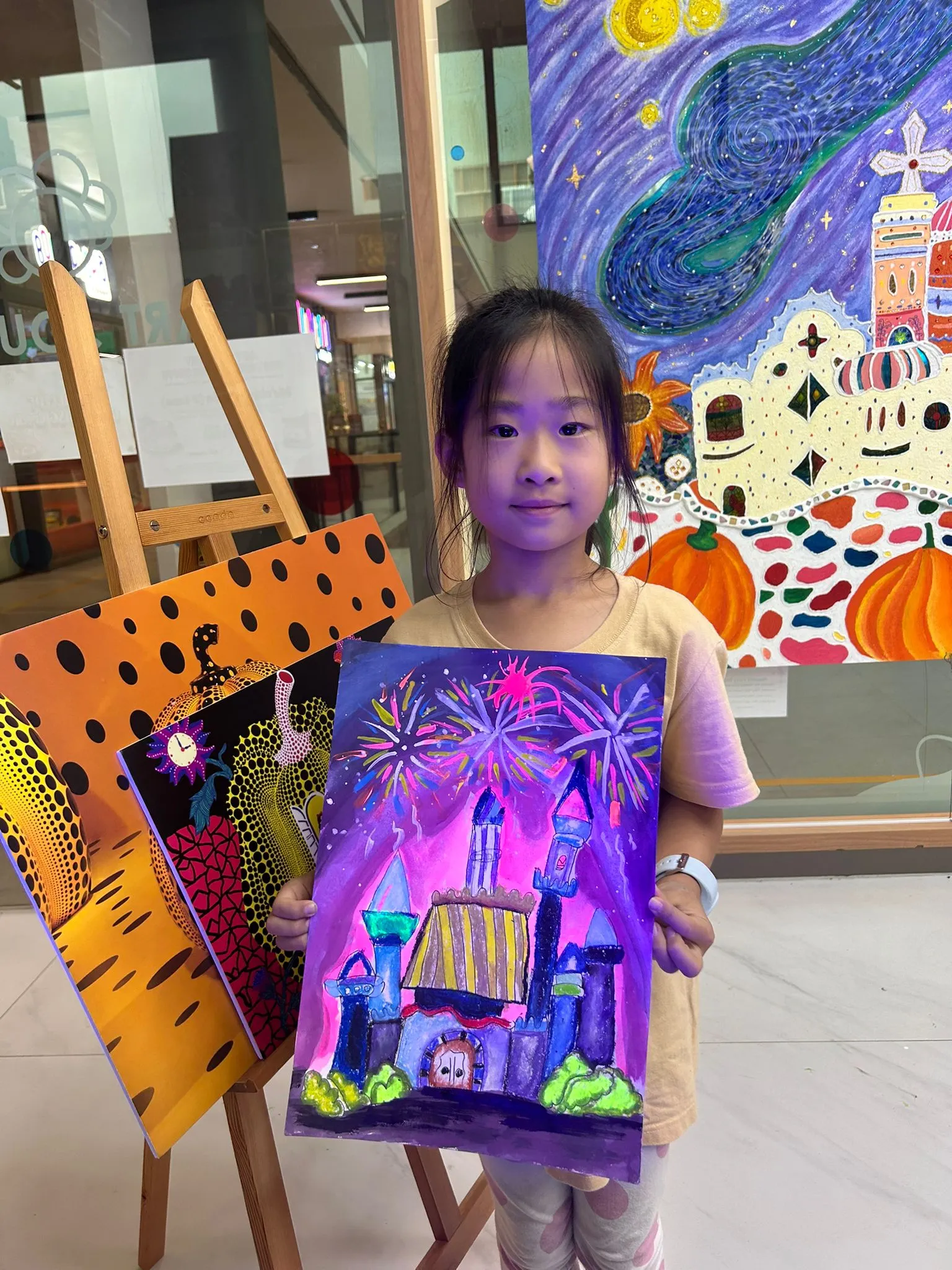
Young children thrive on visible results. If they walk out of a class with something they made — a painting, a clay animal, a mosaic coaster — they feel a tangible sense of accomplishment. This matters more than you might think. It builds creative confidence, which is the foundation for everything else.
At Art Journey, every two workshop sessions result in a completed artwork that children take home. For the 4–6 age group, the pace is set so that even within a single session, they have something to show for their effort.
It's worth setting your own expectations before enrolling your child. Here's an honest look at what you should and shouldn't expect after a few months of regular sessions:
| Expect This | Don't Expect This |
|---|---|
| Willingness to try new materials and activities | Technically "correct" drawings or paintings |
| Growing confidence in creative expression | Sitting perfectly still for 2 hours |
| Improved fine motor skills (grip, control, coordination) | Artwork that looks like an adult made it |
| A child who talks about what they made and why | Consistent interest every single week (some days they won't feel like it — that's normal) |
| Messy hands, paint on clothes, and a big smile | A portfolio-ready collection of "impressive" work |
| Observation skills — noticing colours, shapes, and details in the world | The ability to draw realistically (that comes much later, around 8–10) |
A note for parents who worry their child "can't draw": At 4–6, there is no such thing as a child who can't draw. There are only children who haven't been given the right materials, the right encouragement, and the right environment. A good art class fixes all three.
Art Journey's workshops are built around the principle that children learn best through exploration, not instruction. The "Young Creator" programme (ages 4–7) is specifically designed for the developmental stage we've been describing — short attention spans, sensory-driven learning, and a need for variety, encouragement, and tangible results.
You can also read more about how Art Journey's approach compares to traditional classes in our Art Class vs Art Workshop comparison guide.
Bring this mental checklist to any trial class or studio visit:
"What age group will my child be with?" — The answer should be specific (e.g., "4–7 year olds"), not vague ("all ages" or "4 and above").
"Can I watch a trial session before committing?" — Any confident programme will say yes. If they won't, that's worth questioning.
"What materials do children work with?" — If the answer is only "pencils and watercolour," it may be too narrow for a 4–6 year old. Look for variety.
"How do you handle a child who gets frustrated or doesn't want to participate?" — This tells you a lot about the teacher's philosophy. A good answer involves patience, redirection, and zero pressure.
"Does every child's artwork look different at the end?" — If yes, it's a genuine creative exploration. If no, it's template copying dressed up as art class.
"How long is a session, and are there transitions or breaks?" — For 4-year-olds, sessions should ideally be under 90 minutes with natural pacing changes.
Art Journey's Young Creator programme welcomes children from age 4. Book a single session — no term commitment, no lock-in. See for yourself whether it's the right fit.
Book a Trial SessionChildren can begin structured creative exploration from around age 3–4, provided the programme is designed for this age group. Look for sessions that emphasise sensory play, hands-on materials, and creative exploration rather than formal technique instruction. Programmes with specific age grouping (such as 4–7 year olds) are a much better fit than mixed-age classes.
Ideally 45–75 minutes for 4-year-olds, extending to 60–90 minutes for 5–6 year olds. Sessions should include natural transitions between activities rather than a single long task. Any class asking a 4-year-old to focus on one activity for more than 20 minutes at a stretch is not well-designed for the age group.
Many children say this — and it usually means they've compared their work to an older child's or an adult's and felt they fell short. A good art class for 4–6 year olds never asks children to draw "correctly." Instead, it encourages them to express ideas through colour, texture, shape, and materials. Once the pressure of "getting it right" is removed, most children relax and start creating freely.
Art classes typically follow a syllabus with teacher-led instruction and progressive skill-building. Art workshops are theme-based, child-led, and use a wider variety of materials. For children aged 4–6, workshops are generally a better fit because they match the developmental need for exploration, sensory engagement, and creative freedom rather than structured technique lessons.
Yes. Art Journey's "Young Creator" programme is designed specifically for children aged 4–7. Sessions are theme-based, use a wide range of materials (clay, mosaic, sand, mixed media, paint, and more), and follow a child-led approach inspired by Piaget and Reggio Emilia principles. Every two sessions, children complete a finished artwork they take home.
Ask about age grouping (4–7 year olds should be separated from older children), observe whether children's work looks different from each other (not template copies), check the variety of materials offered, and attend a trial session. A well-designed class for this age group will feel playful, sensory-rich, and low-pressure — not like a formal lesson.
Once a week is a great starting point. Consistency helps children build familiarity and confidence, but there's no need for intensive scheduling at this age. Even fortnightly sessions can be beneficial if the programme is well-designed. The key is that your child looks forward to going — not that they attend as often as possible.