





Every child in Singapore learns about the country's multicultural heritage in social studies. But there's a big difference between reading about Peranakan tiles in a textbook and making a mosaic inspired by them. Between hearing that Chinese calligraphy is an art form and holding a brush loaded with ink. Between knowing that kolam patterns are part of Indian tradition and layering coloured sand to create one. Art turns heritage from something children know about into something they've experienced with their own hands.

Singapore's identity is built on the interweaving of Chinese, Malay, Indian, Peranakan, and Eurasian traditions — plus the modern, uniquely Singaporean culture that's emerged from their intersection. Art projects inspired by these traditions give children a tangible, sensory connection to that identity. They learn not by memorising facts, but by making something that carries cultural meaning.
Here are 8 heritage-inspired art projects — a mix of home activities and studio workshops — that teach children about Singapore through creativity. Each one is tied to a specific cultural tradition and includes a simple conversation starter you can use to give the project context.
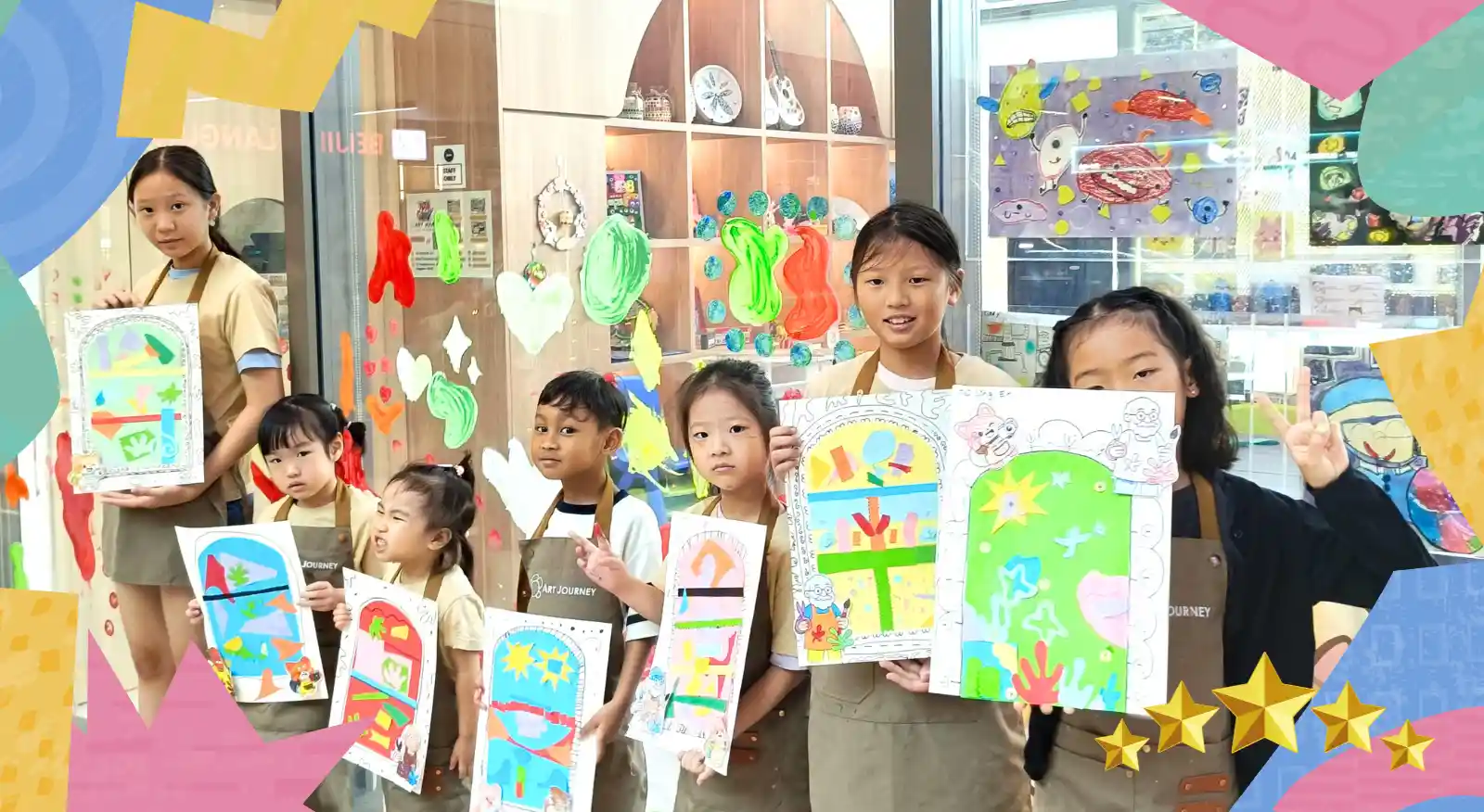
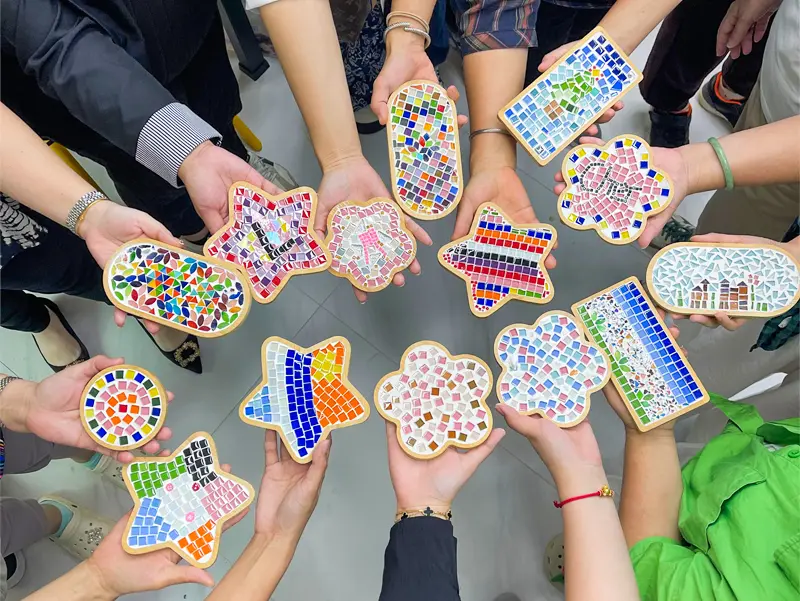
Blue-and-white porcelain is one of the most recognisable elements of Chinese decorative art — you'll see it in temples, heritage homes, and museums across Singapore. At Art Journey, children arrange pre-cut porcelain pieces (safe, smooth edges) onto a photo frame, creating mosaic patterns inspired by this centuries-old tradition. The process teaches patience and design thinking while connecting children to a cultural art form they've seen but may never have examined closely.
Conversation starter: "Have you ever noticed the blue-and-white plates in Chinatown restaurants? This kind of art has been made for over 600 years."
The colourful, ornate tiles on Peranakan shophouses in Joo Chiat and Katong are one of Singapore's most photographed architectural features. Give your child a square piece of card or canvas and ask them to paint a symmetrical tile design using bright colours — pinks, greens, blues, and golds. Show them photos of real Peranakan tiles first (a quick Google search works), and let them create their own interpretation. Arrange four tiles together and you have a miniature Peranakan wall.
Conversation starter: "Peranakan people are descendants of Chinese immigrants who married Malay locals. Their culture is a beautiful mix of both — look at how the tiles use Chinese flower designs with Malay colour palettes."
Rangoli (also called kolam) are intricate floor designs created with coloured powder, rice, or sand — a tradition central to Indian culture, especially during Deepavali. At Art Journey's sand art sessions, children create their own rangoli-inspired patterns by peeling adhesive sections and layering coloured sand. The repetitive peel-and-sprinkle process is calming and produces vibrant results that even very young children are proud of.
Conversation starter: "In Indian homes, rangoli patterns are drawn on the floor to welcome good luck and guests. Each colour has a meaning — what colours would you choose for your home?"
Hand-held fans have been part of Chinese culture for thousands of years — used for cooling, ceremony, and artistic expression. At Art Journey, children paint their own lacquer fan using traditional techniques and colourful lacquer paints. They can add Chinese calligraphy characters, nature motifs, or abstract designs. The finished fan is both a piece of art and a functional object — a connection between form and purpose that's central to traditional Chinese craft.
Conversation starter: "In ancient China, the designs on a fan told people about the owner's personality and taste. What does your fan design say about you?"
Batik is a traditional textile art practised across Southeast Asia — particularly in Malay and Javanese culture. The traditional process uses hot wax to create resist patterns on fabric, which are then dyed. For a child-friendly version, use white fabric (an old pillowcase works) with fabric markers or squeeze-bottle fabric paint to create flowing, organic patterns. Show your child images of real batik cloth first — the flowing florals, geometric borders, and rich earthy colours are instantly recognisable.
Conversation starter: "Batik designs are often inspired by nature — flowers, waves, birds. Many Malay wedding ceremonies feature batik fabric. Can you spot batik patterns in Singapore?"

Bamboo weaving is practised across Chinese, Malay, and Indian cultures in Southeast Asia — making it one of the few craft forms shared by all of Singapore's major ethnic groups. At Art Journey, children interlace bamboo strips onto a photo frame, creating patterns through the over-under rhythm of weaving. It's a meditative, tactile process that builds patience and fine motor skills. The cultural significance — shared craft across cultures — makes it a perfect Racial Harmony Month project.
Conversation starter: "Did you know that Chinese, Malay, and Indian cultures all practise bamboo weaving? It's one of the things Singapore's communities have in common — even their craft traditions overlap."
Hawker culture is a UNESCO-inscribed element of Singapore's intangible cultural heritage. Challenge your child to build a miniature hawker stall using a shoebox, cardboard, paper, and whatever craft materials you have at home. They design the stall name, create tiny food items from clay or paper, add signage, and decorate the stall. Some children recreate their favourite real hawker stall; others invent their own dream stall. Either way, they're engaging with one of Singapore's most defining cultural institutions.
Conversation starter: "Singapore's hawker centres were recognised by UNESCO as special — one of the few food cultures in the world to get that honour. If you could run any hawker stall, what would you sell?"
Ask your child to paint the view from their HDB corridor, the playground downstairs, their favourite kopitiam, or the walk to school. This isn't about Singapore's famous landmarks — it's about the everyday, ordinary places that make up their actual experience of the country. An HDB block painted by a 6-year-old is as much a piece of Singapore heritage art as any Merlion painting. At Art Journey, children can work on real canvas, making the finished piece something the family keeps and displays.
Conversation starter: "What's the first thing you see when you step out of our flat? What sounds do you hear? What smells? Paint what home feels like to you."
Singapore's multicultural identity is the country's greatest asset — but for children growing up here, it can feel abstract. They know Singapore has four official languages and multiple festivals, but that knowledge often stays in the head rather than the heart. Art changes that. When a child makes a rangoli with coloured sand, they're not just learning about Indian culture — they're experiencing it through their senses. When they weave bamboo, they're connecting to a tradition that predates Singapore's independence.
Heritage art projects also give families a reason to talk about culture in a natural, non-preachy way. The conversation starters included with each project above aren't lectures — they're starting points for genuine curiosity. "When did our family come to Singapore?" "Why do we celebrate this festival?" "What does this pattern mean?" These conversations happen more easily when everyone's hands are busy creating something together.
When to do these projects: Heritage art works year-round, but there are natural peaks: Racial Harmony Day (July 21), National Day (August 9), Mid-Autumn Festival, Deepavali, and Chinese New Year are all perfect anchors. Art Journey's themed workshops often align with these cultural moments — check what's running when you plan to visit.
For more National Day-specific craft ideas, see our guide on 10 fun National Day craft ideas for kids.
Blue-and-white porcelain mosaic, lacquer fan painting, sand art rangoli, bamboo weaving, canvas painting, and more — all available at Art Journey. Ages 3+. All materials provided.
Book a SessionArt gives children a hands-on, sensory experience of cultural traditions — mosaic using Chinese porcelain patterns, sand art inspired by Indian rangoli, batik-style painting from Malay textile tradition, and bamboo weaving shared across cultures. When children make something connected to heritage, the learning moves from abstract knowledge to personal experience.
Simple projects like sand art rangoli and canvas painting work from age 3. More detailed projects like porcelain mosaic, lacquer fan painting, and bamboo weaving work best from age 5–6 onwards. The projects in this guide span ages 3–12, with each one marked with a recommended starting age.
Yes. Art Journey offers several heritage-inspired creative formats: blue-and-white porcelain mosaic, lacquer fan painting, bamboo weave art, sand art (including rangoli-inspired designs), and canvas painting with cultural themes. These activities are available year-round, with special themed sessions around National Day, Racial Harmony Day, and major festivals.
Yes — several projects work well at home with basic materials. Peranakan tile-inspired painting needs only card and paint. Batik-style fabric painting uses fabric markers on white cloth. The hawker stall diorama uses a shoebox and craft supplies. The "My Neighbourhood" painting needs only paper and crayons. For more complex projects (porcelain mosaic, lacquer fans), a studio like Art Journey provides the specialist materials.
Heritage art works year-round, but natural peaks include Racial Harmony Day (July 21), National Day (August 9), Chinese New Year, Deepavali, and Hari Raya. Schools often cover multicultural topics during these periods, so heritage art at home or in a workshop reinforces what children are learning in class.
Singapore's heritage art draws from Chinese, Malay, Indian, Peranakan, and Eurasian traditions — plus the uniquely Singaporean culture that's emerged from their intersection. Hawker culture, HDB living, and the blend of languages and customs are all part of Singapore's living heritage that children can explore through art.
Singapore's social studies curriculum covers multicultural identity, national symbols, and community heritage. Heritage art projects give children a hands-on, experiential connection to these topics — reinforcing classroom learning through sensory engagement. A child who has made a rangoli remembers it differently from one who only read about it in a textbook.
Art Journey is a creative studio in Singapore offering hands-on art workshops for children aged 3 and above, plus art jamming sessions for all ages. Located at Plantation Plaza, Jurong West. Open daily 10am – 9pm.