











Your 6-year-old comes home from school and draws the same thing three days in a row: a small figure alone in a corner, surrounded by big shapes that might be buildings, or might be something pressing down. You almost throw it away with the day's other papers. But something makes you look twice. Are you reading too much into it — or not enough? This guide won't turn you into a therapist. But it will help you become a more attentive reader of something your child is already communicating: through colour, shape, figure, and space, every time they pick up a pencil.
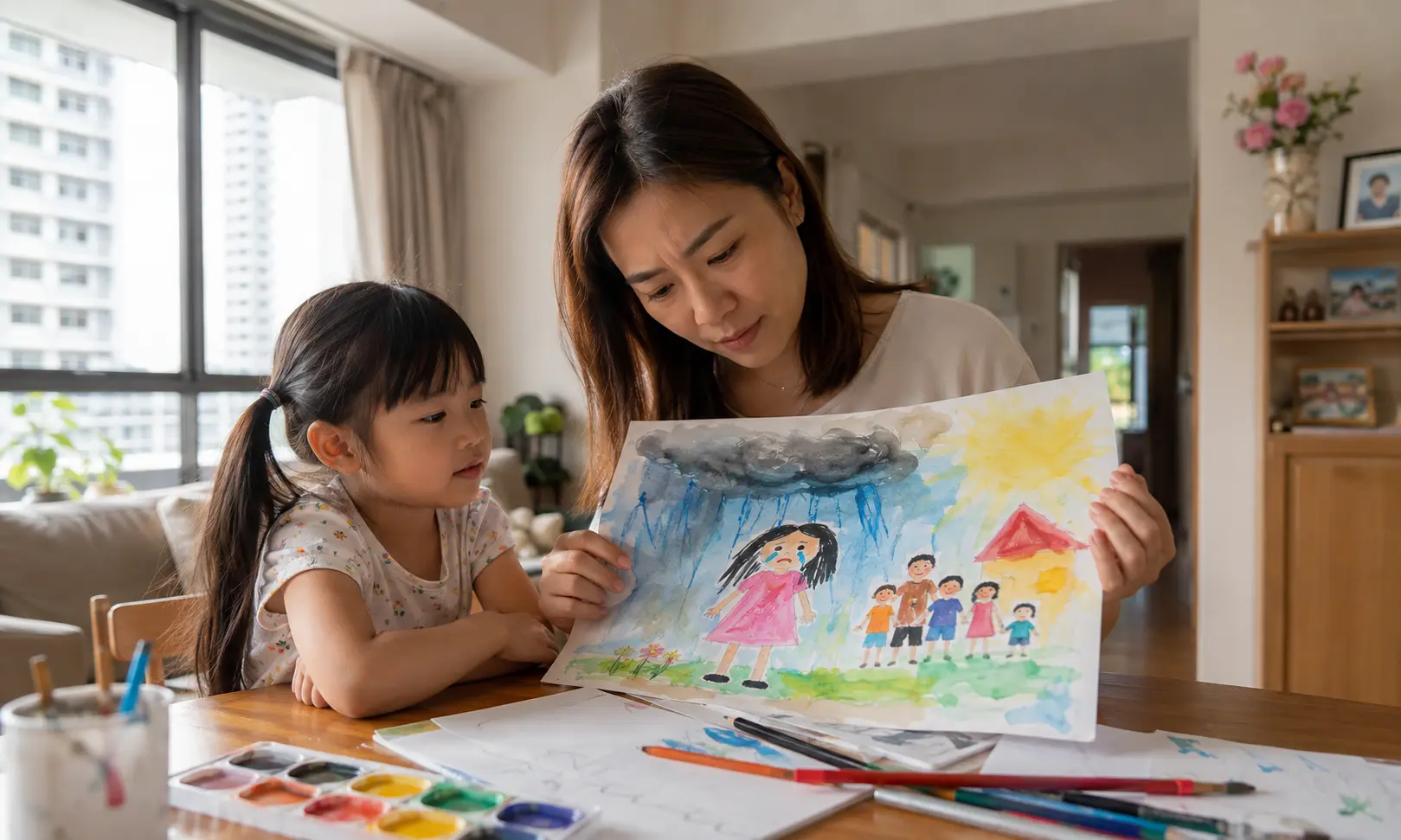
Child art psychologists and art therapists are careful to note two things that parents should anchor to before analysing anything. First: one artwork tells you very little. It is patterns across multiple works — especially over weeks and months — that become meaningful. A single dark painting might simply mean your child was in a stormy mood that afternoon. Ten dark paintings in a row is worth a closer look.
Second: context is everything. A child who draws war scenes after watching a superhero film is processing external content, not internal distress. A child who draws the same war scenes unprompted, repeatedly, without a clear external trigger, is using art to process something internal. The artwork does not change between these two scenarios — the context does. According to Zero to Three, a leading child development organisation, creative expression in young children is most meaningfully interpreted alongside behavioural, social, and contextual cues — not in isolation.
With those anchors in place, here is what to look for.
Colour is the signal most parents notice first — and the one most worth observing consistently over time. Children's colour choices are rarely random at the planning stage; what varies is whether the choice reflects mood, preference, external influence (a new set of markers), or the specific subject being drawn.
A child who normally uses a range of colours and suddenly switches to drawing everything in black, dark grey, or dark brown — for several sessions in a row — is worth a gentle conversation. Dark colours are a normal part of art-making, especially when drawing night scenes, storms, or animals. What is less typical is a child who previously used bright, varied palettes and then abandons them entirely without a subject-matter reason.
What it might reflect: Low mood, withdrawal, processing a difficult experience. What it might not mean: Anything in particular, if there is a simple contextual explanation (the other markers dried out, they are copying a book they are reading, they have decided dark colours look "serious").
A child painting a shark in hot pink and sunshine yellow, or a thunderstorm in neon colours, is not misunderstanding — they are asserting themselves through colour. This is typically a healthy, confident creative choice and a sign of strong emotional self-expression. In sessions at Art Journey, instructors regularly observe that children in particularly high-energy or positive moods gravitate toward bold, surprising colour combinations that seem to "break the rules" of the subject matter.
What it might reflect: Confidence, joy, emotional expansiveness, a desire to surprise. Not a concern.
A child who creates something, then completely covers it with heavy scribbling — particularly in red or black — is often expressing something they wanted to hide, undo, or eliminate. The covering action is a visual act of deletion. Combined with other signals (withdrawal, sleep changes, school avoidance), this warrants a direct but gentle conversation.
When children draw people — especially family figures — the choices they make about size, placement, inclusion, and proportion carry consistent meaning across children of all backgrounds. These patterns have been studied extensively in child development research and are among the most well-documented signals in children's art.
When a child draws a family scene and positions their own figure significantly smaller than everyone else's, or places themselves at the far edge of the paper while others are central, this can reflect how they currently perceive their place in the family. A child who feels overlooked or diminished by recent events — a new sibling, parents' attention directed elsewhere, a recent scolding — often expresses this proportionally without being aware of it.
If the pattern is consistent across several drawings over multiple weeks, it is worth a quiet one-on-one check-in: not about the drawing, but about how they are generally feeling.
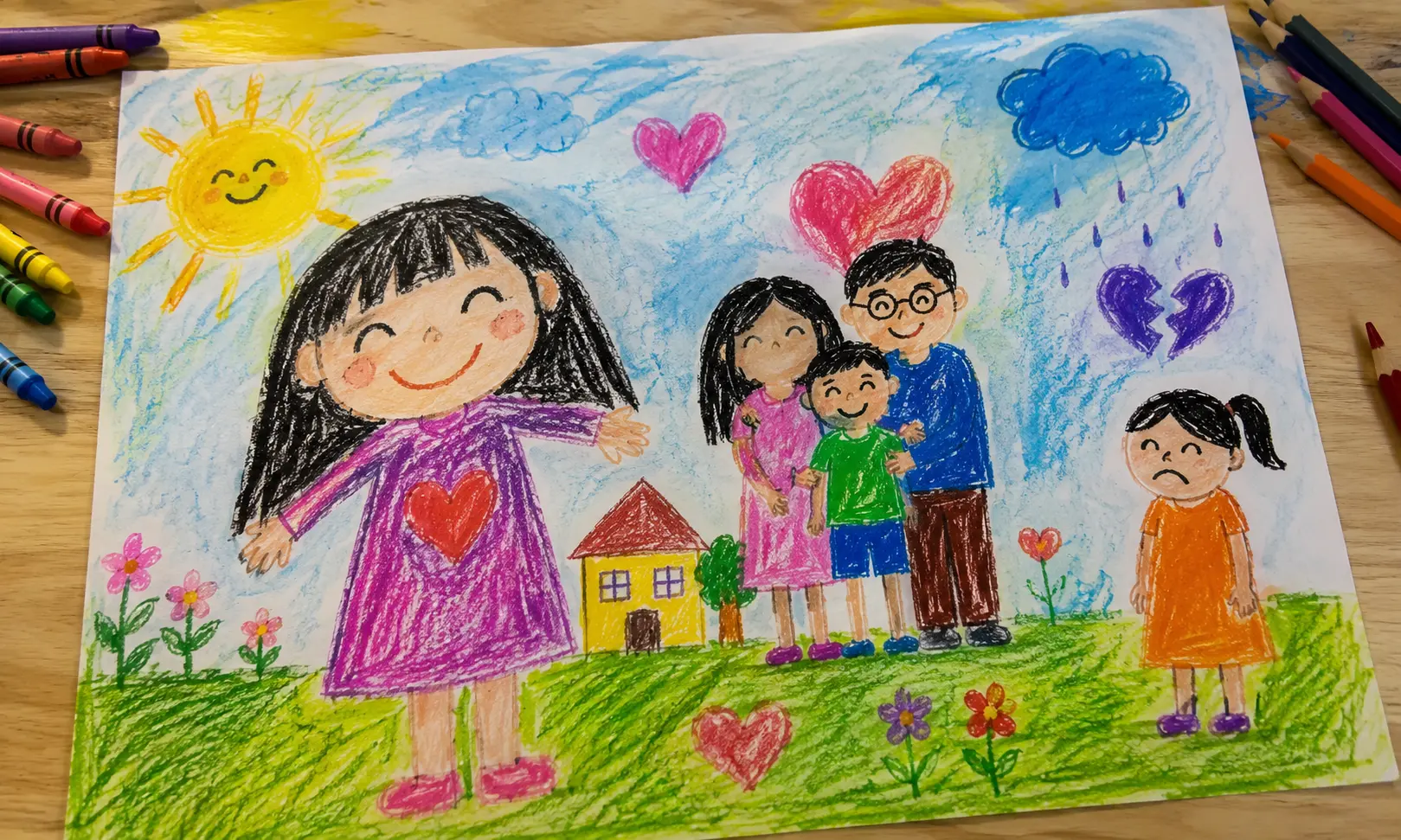
Children typically include the people who are emotionally significant to them in family drawings. When someone expected is absent, it might mean the person was simply not on the child's mind that day. But a pattern of consistently omitting a specific person across multiple family drawings is worth exploring gently: not "why didn't you draw Daddy?" but "tell me about everyone you drew here."
Children who draw figures with no mouth — particularly self-figures — sometimes feel silenced, unheard, or unable to express themselves verbally. This is one of the more specific signals that art therapists note in children experiencing communication difficulties at home or school. As with all signals: one drawing means little; a consistent pattern across many drawings is more meaningful.
Children regularly draw monsters, battles, and dark creatures — this is developmentally normal and often reflects processing of stories, games, and media rather than internal distress. The signal worth noting is when a child who does not typically draw violent imagery suddenly shifts to it repeatedly, or when the imagery becomes increasingly specific and personal.
Context check first: What have they been watching, reading, or playing lately? If there is a clear external source, the imagery is likely processing rather than expressing. If there is no clear external source and the pattern continues, a conversation with a school counsellor or child psychologist is worth considering.
This is worth noting as a positive signal. Children who consistently draw warm, safe environments are often expressing a felt sense of security and belonging. This is a healthy, reassuring pattern, particularly for children who have been through disruption. The consistent return to "safety images" suggests the child is emotionally anchoring themselves through art.
Children who press very hard with their pencil or crayon — indenting the paper, breaking pencil tips — are often channelling strong emotions through the physical act of drawing. This can reflect frustration, anger, intense excitement, or high physical energy. Worth noticing alongside behavioural cues: is this a consistently tense child, or a child having an energetic, exciting day?
A child who consistently uses only a small portion of the available paper — leaving large areas blank — sometimes reflects a sense of smallness, caution, or emotional contraction. Children who feel confident and expansive typically fill the page. A consistent spatial pattern across many drawings is worth a gentle, unhurried check-in.
The most important rule is deceptively simple: ask about the drawing, not about the feeling. A child who is directly asked "are you sad?" will often say "no." But a child asked about their drawing will often talk freely, because the drawing sits at a safe distance from themselves.
"I noticed you used a lot of [colour] today. What made you choose that?"
"What is happening in this part of the picture?"
"If this person could say something, what would they say?"
"What happened just before this moment in the picture?"
These questions invite narrative rather than emotional self-report — and children who cannot answer "how are you feeling?" will often answer "what is your character feeling?" with surprising depth and honesty.
Do not interpret in front of your child. "Did you draw yourself small because you feel small?" is deeply uncomfortable for a child who has no idea why they made that choice — and it can make them self-conscious about future drawings, closing down the very channel you are trying to read.
Do not assign definitive meaning. Visual signals in children's art are patterns and indicators, not diagnoses. A dark drawing is not proof of depression. A missing parent in a family portrait is not proof of family dysfunction. Hold your interpretations lightly.
Do not redirect what they want to draw. Even dark imagery serves a function — it is how children process. "Why don't you draw something happy?" teaches them that certain feelings are not welcome in the one space where they were expressing them freely.
If you notice several of the following occurring simultaneously — consistent dark or violent imagery with no external source, self-figures repeatedly depicted in harm, heavy mark-making over extended periods, artwork paired with behavioural withdrawal, sleep disturbance, or school avoidance — a conversation with your child's school counsellor or a child psychologist is worth initiating.
Singapore's primary school counsellors are specifically trained to support children through exactly these kinds of periods. They see the artwork in a broader context of the child's school behaviour that complements what you are seeing at home.
You can only notice patterns if you have a body of work to observe. A child who creates art consistently — at home, at a studio, in a dedicated corner of the living room — gives you a running visual record of their emotional life over months and years. A parent who has 50 paintings to look back through can notice a shift in March that they could not see from a single Tuesday afternoon drawing.
When your child attends Art Journey consistently, each finished piece comes home as part of a growing body of work — dated, varied in theme, reflecting creative choices made independently. Photographed and collected over time, this archive becomes genuinely useful not just as a portfolio or keepsake, but as a window into your child's inner world across seasons and years.
A simple habit that makes a difference: When your child brings a piece home, photograph it before putting it away. Note the date. Over six months, you will have a visual timeline that makes patterns visible in ways a single piece never could. The colour shifts, the figure changes, the composition choices — you will see them when you look across the timeline in a way you cannot see from one drawing at a time.
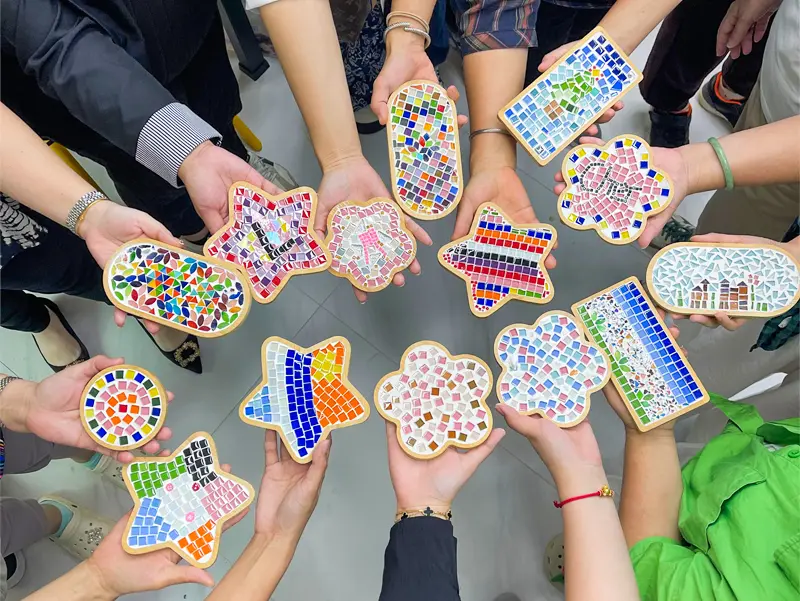
At Art Journey, children work independently — choosing colours, subjects, and compositions without a sample to copy. What they make is genuinely theirs. And what they make tells you something real. Open daily 10am–9pm. Ages 4–12.
Book a SessionYou can notice patterns and signals worth exploring — but individual drawings rarely tell a definitive story. What matters is patterns across multiple works over weeks or months: consistent colour shifts, repeated figure abnormalities, recurring subject matter without clear external triggers. One drawing is a data point; ten drawings in the same direction is a pattern worth a gentle conversation.
Usually not. Dark themes and violent imagery are developmentally normal and often reflect processing of stories, games, and media. The signal worth noticing is a sudden shift from a typically lighter palette to persistent dark imagery without a clear external source, particularly when accompanied by behavioural changes at home or school.
It can reflect a temporary sense of being overlooked or diminished — common during transitions like a new sibling arriving, a school change, or a period when parental attention has been elsewhere. A consistent pattern of small self-figures across many drawings over several weeks is worth a quiet, one-on-one check-in. Ask about the drawing rather than directly asking how they feel.
Ask about the picture, not about the feeling. "Tell me about this person" works better than "are you sad?" Children who cannot answer emotional questions directly will often talk freely about their drawings because the artwork provides safe distance from themselves. Open-ended questions ("What is happening here?" "What would this person say?") produce more genuine responses than closed ones.
When you notice multiple signals occurring simultaneously over an extended period — persistent dark imagery without external source, self-figures repeatedly depicted in harm, heavy mark-making paired with behavioural withdrawal, or artwork that changes significantly alongside sleep disturbance or school avoidance. Singapore's primary school counsellors are a good first port of call.
Yes. Paint, with its fluid nature, often produces more emotional, gestural work. Clay produces tactile, physical expression that can be aggressive or gentle depending on how the material is handled. Pencil and pen tend to produce more controlled, deliberate work. Children sometimes express things in clay that they do not express in paint, and vice versa — which is one reason variety in art materials matters for emotional expression.
Photograph every piece as it comes home — front and back, noting the date. Create a simple folder on your phone labelled by year. Over six months, you will have a visual timeline that makes patterns visible in ways individual pieces never could. For more on managing your child's growing artwork collection, see our guide on what to do with all your child's artwork.