















It was going so well. They loved the first few sessions — came home excited, showed you the painting, asked when they could go back. Then one Saturday morning, still in pyjamas, arms crossed: "I don't want to go anymore." Your heart sinks. Your brain fires in three directions: Is something wrong? Did I waste the money? Should I make them go anyway? This is one of the most common — and least discussed — moments in Singapore parenting. Here's how to handle it without panicking, forcing, or giving up too quickly.
Every enrichment activity in Singapore — swimming, piano, Chinese tuition, coding, ballet, art workshops — hits this wall at some point. Research on children's motivation from the American Psychological Association consistently shows that children's interest in structured activities naturally fluctuates. A dip in enthusiasm isn't a sign that the activity was wrong — it's a sign that your child is developing normal patterns of engagement, resistance, and self-advocacy.
What matters is why they're saying it. The same phrase — "I don't want to go" — can mean six completely different things depending on the child and the context. Your job isn't to override the statement or surrender to it immediately. Your job is to decode it.
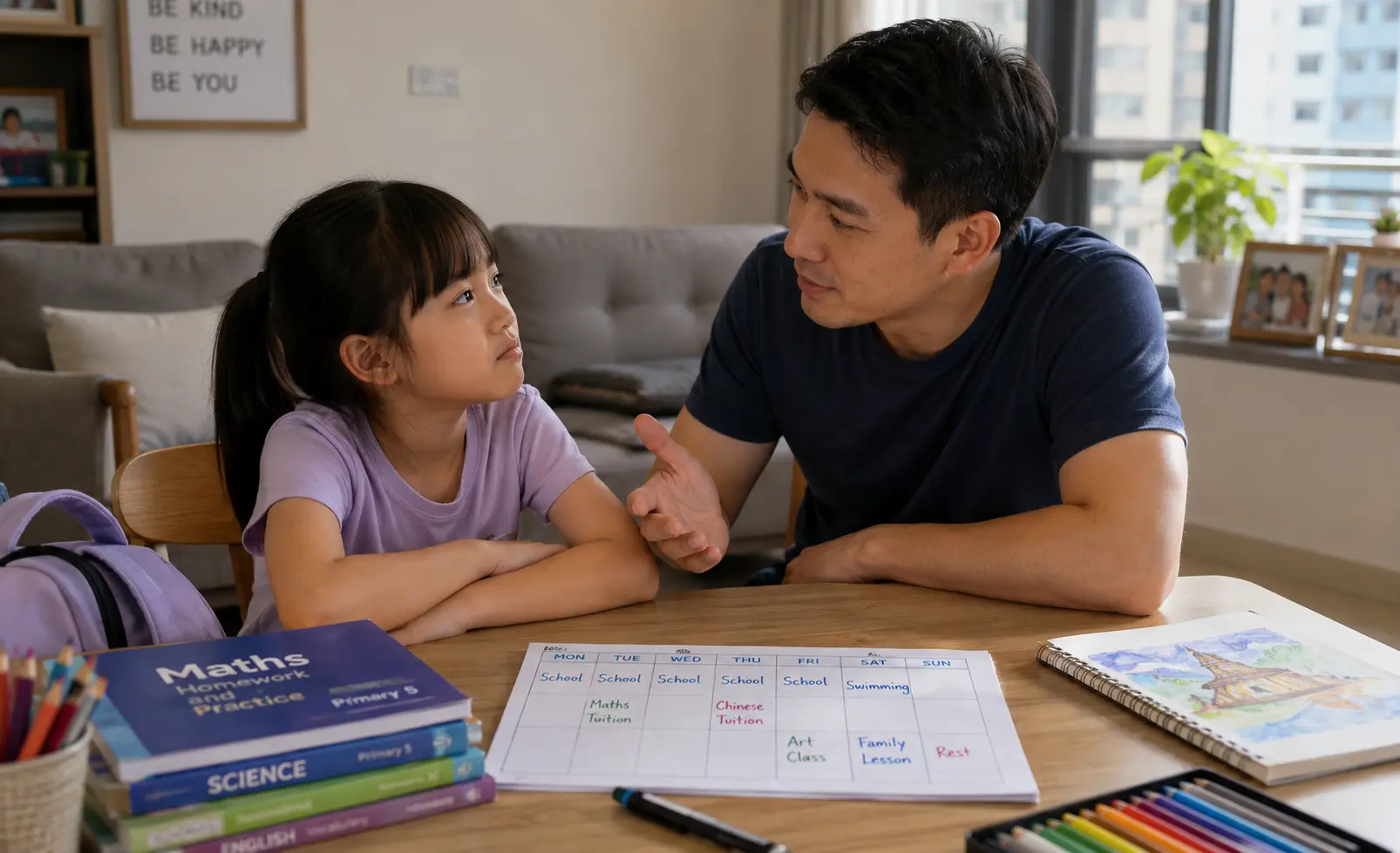
The most common reason in Singapore — and the easiest to miss because it looks like laziness. Your child isn't bored with art. They're exhausted from a week that included school, homework, two tuition sessions, swimming, and now Saturday morning is the only time they could have stayed in bed. The resistance isn't about the activity; it's about the calendar.
This one is sneaky. Your child enjoyed art when it was easy — when everything they made got praised. But now they're attempting harder things, and the gap between what they imagine and what they produce is becoming visible to them. Rather than face that gap, they'd rather opt out entirely. "I don't want to go" actually means "I'm scared my next piece won't be as good as my last one."
Somewhere around Primary 2 or 3, children become intensely aware of what their friends are doing on weekends. If the peer group's Saturday activity is football or swimming, a child who goes to an art workshop might feel socially out of step — especially if they've been teased about it or if the friend group doesn't value creative activities.
This is the most legitimate reason on the list — and the one parents are most reluctant to accept, because it means the thing you enrolled them in might have genuinely run its course. If your child has been doing the same activity in the same format at the same studio for 18 months, boredom is not a character flaw. It's a natural response to repetition.
Sometimes a child's reluctance traces back to a single incident: a comment from another child about their work, a moment when they felt embarrassed, an instructor who corrected them sharply, or a session where everything went wrong and they left feeling bad about themselves. Children don't always articulate these experiences — they just say "I don't want to go."
Sometimes — rarely, but sometimes — a child genuinely doesn't connect with an activity. Not because of fatigue, social pressure, fear, boredom, or a bad experience. They just don't enjoy it. This is the hardest reason for parents to accept, especially parents who've invested time, money, and emotional hope in the activity. But it's a valid answer, and it deserves respect.
When "I don't want to go" first appears, most parents swing between two extremes: forcing the child to continue (because "we paid for this" or "you don't quit things"), or immediately cancelling (because "I don't want to traumatise them"). Both reactions are too fast. Here's a calmer middle ground:
Week 1: Acknowledge the statement without reacting. "Okay, I hear you. Let's skip this week and see how you feel next Saturday." Don't lecture, don't bribe, don't guilt-trip.
Week 2: Gently re-invite. "Art is on this Saturday if you'd like to go. No pressure either way." If they go and enjoy it, the issue was probably temporary (fatigue, mood, one bad session). If they refuse again, move to Week 3.
Week 3: Have the conversation. "You've said no twice now, so I want to understand. Is it the activity itself, or is something else going on?" This is where you'll get the real reason — and the real reason tells you whether to pivot the format, address a social issue, adjust the schedule, or genuinely let it go.
Three weeks gives both you and your child time to think without urgency. Most temporary dips resolve by Week 2. The ones that persist past Week 3 usually have a real underlying cause that's worth understanding.
Don't bribe them. "If you go to art, I'll buy you ice cream after" teaches children that the activity has negative value — it's something to be endured in exchange for a reward. The next time, the bribe needs to be bigger.
Don't guilt-trip. "Do you know how much this costs?" or "I rearranged my whole Saturday for this" puts adult financial and scheduling anxiety onto a child who is simply communicating a feeling. They'll go, but resentfully — and the resentment contaminates the experience.
Don't compare. "Your sister loved art when she was your age" or "Other children would love to have this opportunity" invalidates your specific child's experience by measuring it against someone else's. It never motivates; it only shames.
Don't catastrophise. One "I don't want to go" doesn't mean they'll never create again, that you made a bad parenting decision, or that your investment was wasted. It means they're a child with a fluctuating emotional life. That's healthy.
The hardest parenting truth in this entire guide: Sometimes the right response to "I don't want to go anymore" is "Okay." Not permanently. Not dramatically. Just "okay, not today" — and leaving the door open for next week, next month, or next term. Children who are allowed to take a break from an activity often return to it voluntarily later, with more genuine enthusiasm than they ever had when attendance was compulsory.
Art Journey's drop-in model is specifically built for this reality. There's no term commitment, no wasted package, and no awkward "we're withdrawing" conversation. You simply book when your child is ready — and skip when they're not.
Here's a perspective most parenting articles don't offer: sometimes a child outgrows an activity, and that's not failure — it's development. The child who loved finger painting at age 4 might not connect with it at age 8, not because they've lost creativity but because their creative needs have changed. They might be ready for a more challenging format, a different medium, or a completely different kind of creative expression (music, writing, building, coding).
If your child has genuinely moved on from an activity after a reasonable period of engagement, the experience wasn't wasted. The creative habits, the confidence from completing projects, the patience developed through focused work — all of that stays with them, even if the specific activity doesn't. A child who did 18 months of art workshops and then moved on to something else isn't a quitter. They're a child who gained something real and is now ready for the next thing.
For a deeper look at what children actually gain from creative workshops — the skills that persist even after they stop attending — read our guide on how art workshops build focus and patience.
Art Journey's single-session model means there's no term to cancel and no package to waste. When your child is ready — next week, next month, or next year — the studio is here. Open daily 10am–9pm.
Book When You're ReadyNot immediately. Use the 3-Week Rule: skip one session without pressure, gently re-invite the following week, and if refusal persists, have an open conversation to understand the real reason. Forcing attendance usually creates resentment, while a short, respectful pause often resolves the issue naturally.
Temporary reluctance usually comes with emotion (whining, frustration, mood swings) and resolves after a break. Genuine disinterest tends to be calm, consistent, and non-dramatic — a quiet, repeated "I just don't like it" over multiple weeks. The 3-Week Rule helps you distinguish between the two without rushing to a conclusion.
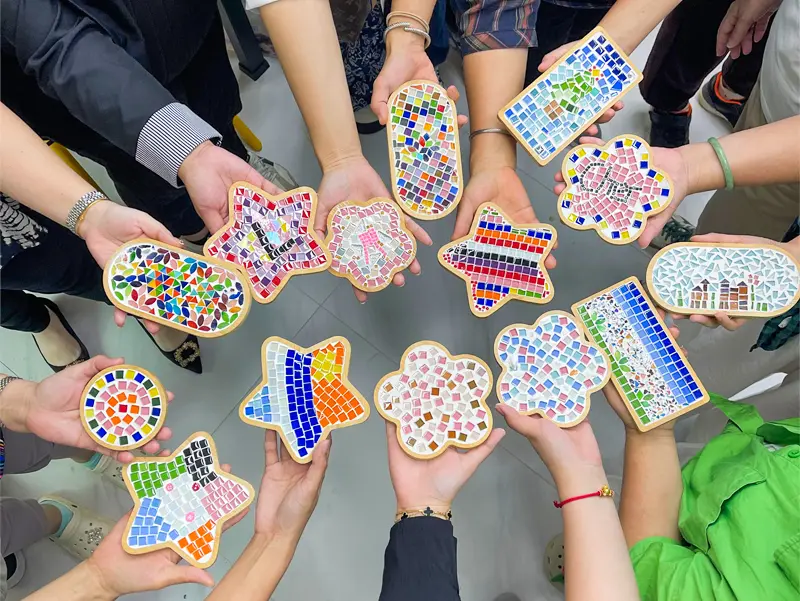
Switch the format, not the category. If canvas painting has gone stale, try mosaic art, clay sculpture, 3D figurine painting, or sand art. The creative engagement may still be there — the surface-level activity just needs refreshing. Art Journey rotates themes fortnightly and offers 7+ formats specifically to prevent repetition fatigue.
Not at the first request — but also not never. The goal is teaching children to communicate their feelings, work through temporary discomfort, and make thoughtful decisions rather than impulsive ones. A pause is different from quitting. Taking one or two weeks off, then reassessing, teaches a much healthier decision-making process than either "you must continue no matter what" or "quit whenever you feel like it."
Completely normal. Children's interests naturally fluctuate as they develop socially, cognitively, and emotionally. A dip in enthusiasm isn't a sign that the activity was wrong — research on children's motivation consistently shows that engagement with structured activities goes through natural cycles of intensity and withdrawal.
This is one of the advantages of studios with session-based booking models like Art Journey — there's no term to cancel or package to lose. If you're locked into a term commitment elsewhere, consider completing the paid sessions at a reduced frequency (fortnightly instead of weekly) rather than forcing attendance that creates negative associations with the activity.
Don't push — create gentle openings. Leave art supplies visible at home. Mention a friend's art session casually. Suggest a completely different format than the one they left ("Have you ever tried clay?" rather than "Shall we go back to painting?"). When they show a spark of curiosity, book a single session immediately — don't wait for a full recommitment. Often, one positive return session is all it takes.