












It's day three of the school holidays. Your child has been fed, showered, and left to their own devices. Twenty minutes later, the words arrive — heavy, accusatory, existentially desperate: "I'm bored." Your instinct is to fix it. Open an app. Suggest an activity. Drive somewhere. But what if the most productive thing you could do right now is absolutely nothing? What if boredom — real, unrescued, screen-free boredom — is exactly what your child's brain has been waiting for?
Think about your child's typical week during term time. School from 7:30am to 1:30pm. Homework. Tuition. Swimming or piano or coding. Family dinner. Screen time. Bed. Repeat. The holidays arrive, and the same instinct kicks in — fill the calendar. Holiday camps Monday to Wednesday. Outing Thursday. Activity Friday. Weekend plans already locked in two weeks ago.
The average Singapore child in 2026 has almost no experience of genuine, sustained, unstructured boredom. Every gap gets filled — if not by a parent, then by a screen. And screens are the ultimate boredom killers: infinite content, zero effort, instant stimulation. A child who reaches for their tablet the moment they feel the first itch of boredom never actually experiences what happens after the itch.
And what happens after the itch is the whole point.
When a child is bored and not given a screen or an activity to fill the gap, their brain enters what neuroscientists call the default mode network (DMN). This is the brain state associated with daydreaming, imagination, self-reflection, and — crucially — creative idea generation. Research published in the APA Monitor on Psychology shows that the DMN is where the brain makes unexpected connections between ideas, rehearses social scenarios, and generates the kind of original thinking that structured activities rarely produce.
In other words: a bored brain isn't an idle brain. It's a brain that's finally been given permission to think for itself.
This is why children who experience regular unstructured time tend to develop stronger independent thinking, more creative problem-solving, and better emotional self-regulation than children whose every waking hour is scheduled. The boredom isn't the problem — it's the prerequisite.
If you've never let your child sit with boredom for more than 10 minutes without intervening, here's what to expect. It follows a remarkably consistent pattern:
This is the phase most parents never get past, because the complaint feels urgent and the solution feels obvious (hand them a device, suggest an outing, turn on the TV). But the complaint is performative — your child isn't actually suffering. They're experiencing the unfamiliar sensation of having no external stimulation, and they're testing whether you'll rescue them from it. Resist.
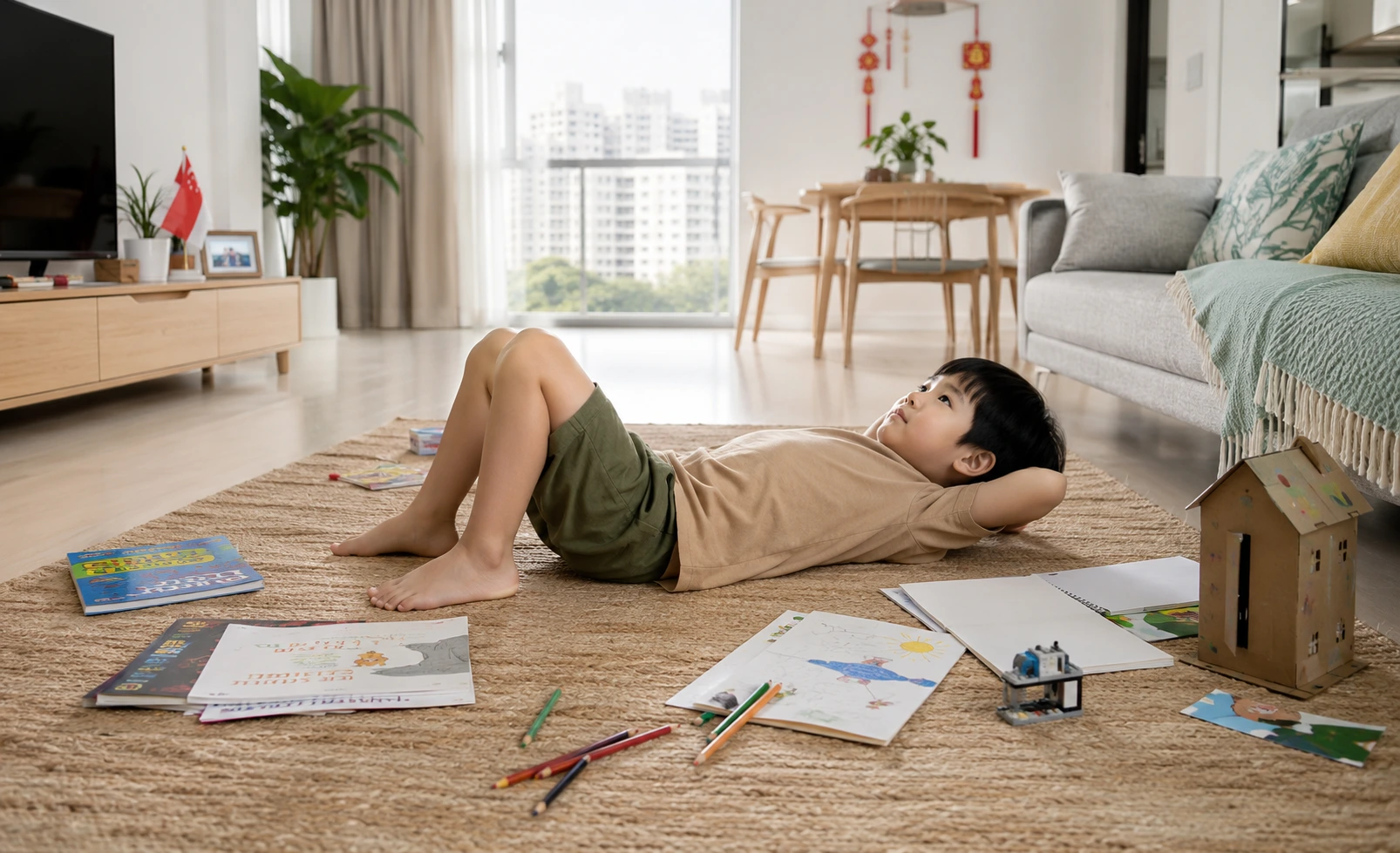
Your child wanders around the house. They open a drawer and close it. They lie on the floor. They stare out the window. They might complain again, louder this time. This phase looks like nothing is happening — but internally, their brain is scanning for something to engage with. The default mode network is warming up. This is the hardest phase for parents to tolerate, because it genuinely looks like your child is wasting time. They're not. They're thinking.
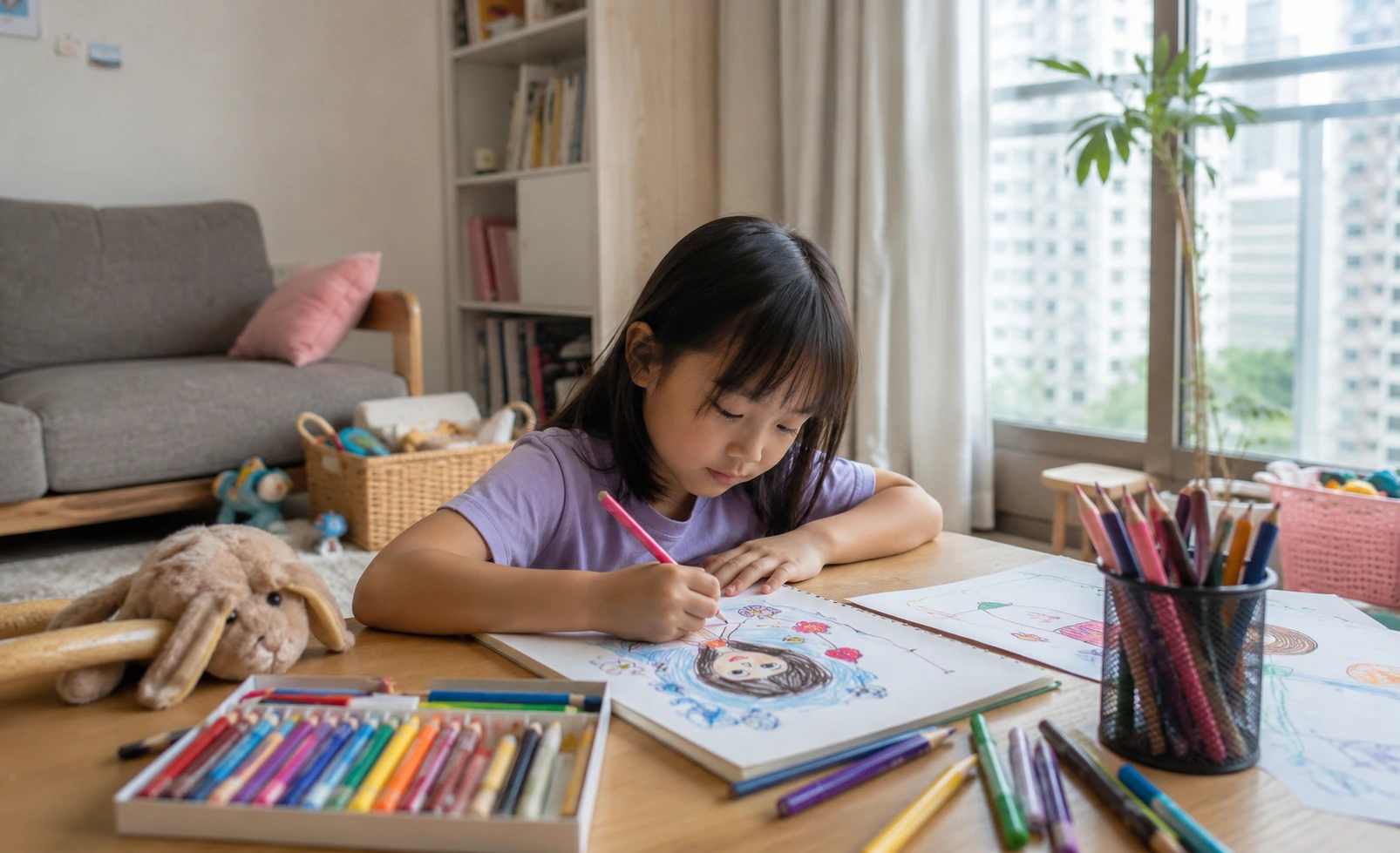
This is the moment everything changes. After enough time without external input, the child generates their own activity. It's rarely what you would have suggested. It might be building a fort from cushions. Drawing a comic strip. Making a "shop" from old containers. Rearranging their bookshelf by colour. Writing a story. Mixing every paint colour together to see what happens. The activity is self-chosen, self-motivated, and — because of that — more deeply engaging than any parent-directed option would have been.
Once the self-directed activity begins, something remarkable often follows: sustained, focused, self-managed engagement that lasts far longer than the child would have spent on an adult-suggested activity. They're in flow — the psychological state where challenge and skill are balanced, time feels compressed, and intrinsic motivation drives the work forward. This is the state that art workshops, music practice, and sport all aim to produce. Boredom produces it for free.
The uncomfortable truth: Phases 1 and 2 feel awful. Phase 3 feels miraculous. Phase 4 feels like vindication. The only way to get to 3 and 4 is to survive 1 and 2 — which means tolerating your child's discomfort (and your own) for about 30 minutes. That's the entire cost of the exercise. Thirty minutes of doing nothing, in exchange for an hour or more of genuine self-directed creativity.
You don't need to direct the play. You just need to make interesting materials accessible. The child's brain does the rest. Here's what tends to work:
Art supplies within reach. Paper, crayons, markers, paint — visible on a shelf, not locked in a cupboard. A child who walks past accessible art supplies during Phase 2 will often reach for them by Phase 3. Our home art corner setup guide covers how to organise this for under $45.
Cardboard boxes. Empty delivery boxes are the single most productive boredom material in existence. They become spaceships, shops, houses, robots, animals, and inventions — all without adult intervention.
Books within arm's reach. Not an e-reader — a physical book. During Phase 2, a child who spots a book they haven't read in a while will sometimes pick it up and disappear for an hour.
Construction materials. LEGO, blocks, magnetic tiles, or even just a roll of masking tape and some paper cups. Anything that can be combined, stacked, or built with invites self-directed play.
A "prompt jar" nearby. Slips of paper with open-ended ideas: "build something taller than you," "draw the weirdest animal you can imagine," "write a letter to your future self." These aren't instructions — they're gentle nudges that a bored child can choose to ignore or pick up.
Boredom is brilliant for building independence, self-direction, and the habit of generating your own ideas. But there are things it can't provide: expert guidance, professional materials, new techniques, creative challenges that stretch a child beyond what they'd choose on their own, and the social experience of creating alongside other children.
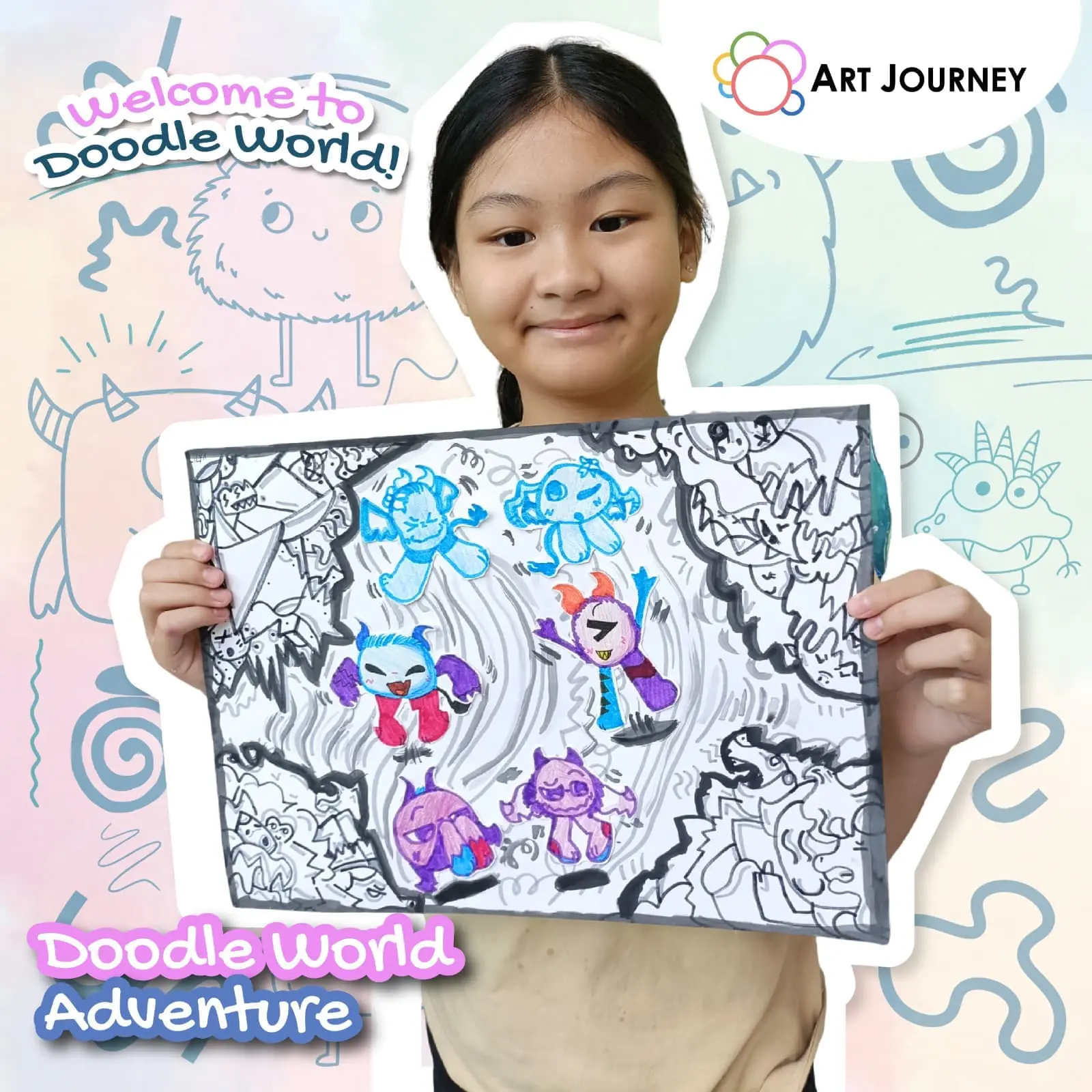
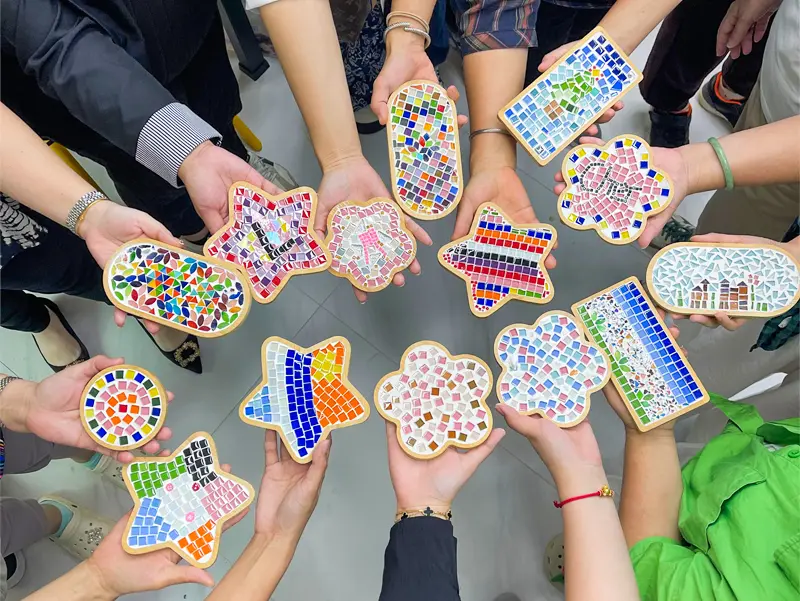
That's the gap a studio fills. A child who has spent Tuesday being productively bored at home — building a cardboard castle, drawing a comic strip, painting with supplies from their art corner — is a child who shows up to a Saturday Art Journey session with a creative engine already running. They're not arriving depleted from a packed week of enrichment; they're arriving curious, energised, and ready to explore something they couldn't do at home: mosaic art with real tiles, clay sculpting with guided technique, or canvas painting on stretched canvas with acrylic paint.
The ideal creative week for a child isn't all boredom and isn't all structured enrichment. It's boredom on most days — building the self-direction habit — and one or two moments of guided, materials-rich creative engagement that give the child something to bring back to their home practice.
The rhythm that works: 5 days of mostly unstructured time (with accessible materials) + 1 session of guided creative engagement (at a studio or workshop) = a child who creates constantly, independently, and joyfully. For more on how to structure this kind of balanced week, see our guide on the enrichment guilt spiral — doing less, better.
If everything above sounds reasonable in theory but terrifying in practice, try this micro-experiment during the next school holiday:
Day 1: Remove screens for the morning (9am–12pm). Make art supplies, books, cardboard boxes, and construction toys visible and accessible. Tell your child: "No screens until after lunch. You can do whatever you want." Then step back. Observe what happens. Don't intervene unless there's a safety issue. Expect Phases 1 and 2 (complaint, restlessness). If Phase 3 (the idea) arrives, note what they chose to do — it's a genuine window into what your child finds interesting when nobody tells them what to do.
Day 2: Same setup. This time, the complaint phase is usually shorter — the child remembers that boredom ended well yesterday and reaches Phase 3 faster. Some children start the morning by going directly to yesterday's self-chosen activity and continuing it.
Day 3: Same setup. By now, most children stop complaining entirely. They wake up and go directly to something they want to do. The habit of self-direction is forming. The boredom muscle has been exercised and it's getting stronger.
Three days is enough to see whether this works for your child. If it does, you've discovered something more valuable than any enrichment class: your child's ability to generate their own engagement from nothing.
A child who's learned to create independently at home is a child who gets more from a guided studio session — arriving curious, not exhausted. Art Journey is here for the days when home supplies aren't enough. Open daily 10am–9pm. No commitment.
Book a SessionYes. Research in developmental psychology consistently shows that children who experience regular unstructured time develop stronger independent thinking, more creative problem-solving, and better emotional self-regulation. Boredom activates the brain's default mode network — the state associated with daydreaming, imagination, and original idea generation — which structured activities and screen time suppress.
Aim for at least 30 minutes. The typical pattern is complaint (0–10 min), restlessness (10–25 min), then a self-generated idea (25–40 min). Most parents intervene during the restlessness phase because it looks like wasted time — but that's exactly when the brain is working hardest to generate its own engagement. If your child hasn't self-directed after 45 minutes, a gentle prompt ("what's one thing you could build right now?") is fine — but avoid solving the problem for them.
They will if the screen is available — screens are designed to be the lowest-effort boredom solution. For the boredom experiment to work, screens need to be physically out of reach during the designated window. Remove the easiest option so the brain has to work harder. Replace screens with accessible physical materials — art supplies, books, cardboard, construction toys.
Visible, accessible art supplies (paper, crayons, paint), cardboard boxes, physical books, construction toys (LEGO, magnetic tiles), and optionally a "prompt jar" with open-ended creative ideas on slips of paper. The key is visibility — materials in an open shelf get used; materials in a closed cupboard get forgotten.
Neglect is the absence of care. Productive boredom is a deliberate parenting choice — you're present, your child is safe, and you've ensured interesting materials are accessible. The difference is intention: you're not ignoring your child; you're giving them the space to develop self-direction. The children who can entertain themselves are the ones whose parents were willing to tolerate the uncomfortable silence.
It supplements them, not replaces them. Unstructured time builds self-direction and creative independence. Guided enrichment (like art workshops) provides expert guidance, professional materials, and creative challenges a child wouldn't encounter at home. The ideal balance is mostly unstructured time (building the habit) with one or two sessions of guided creative engagement per week (stretching the ability).
It's never too late, but older children who've never experienced sustained boredom may take longer to reach Phase 3 (the self-generated idea). Their boredom muscle is weaker because it's never been exercised. Start with shorter screen-free windows (1 hour rather than a full morning) and extend gradually. The pattern still works — complaint, restlessness, idea, flow — it just takes a few more attempts for older children to trust the process.