














You suggest something. A trial swim class, a new food, a birthday party where they'll only know two people, a holiday workshop that looks genuinely fun. And before you've finished the sentence, the answer arrives: "No." Not a considered no. An instant one — delivered with a certainty that seems wildly out of proportion to a thing they have never done. It's tempting to read this as stubbornness, or laziness, or a personality trait you'll have to work around. It's usually none of those. It's a calculation, and once you can see the maths your child is doing, you can change the numbers.
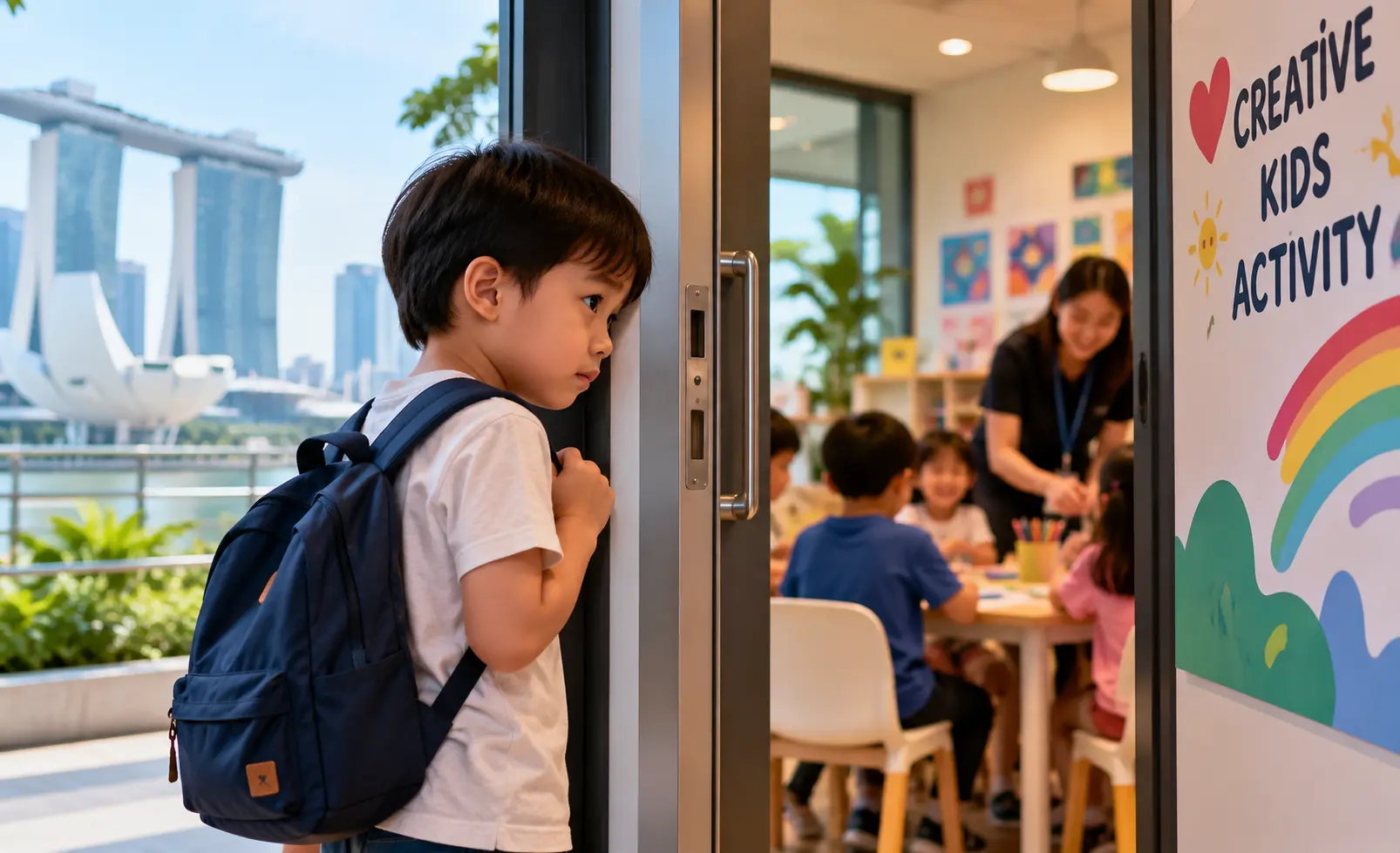
When a child says no to something new, they are not telling you they dislike it — they can't, because they haven't done it. What they're telling you is the result of a very fast internal simulation: they have imagined themselves doing the thing, imagined how it goes, and the imagined version ended badly. The refusal is the output of that simulation, not an opinion about the activity.
This matters enormously for what you do next, because the two readings lead to opposite strategies. If refusal is a preference, the obvious response is persuasion — explain how good it is, list the benefits, promise they'll enjoy it. If refusal is a prediction, persuasion does nothing at all, because you're arguing about the appeal of the activity while your child is worried about something else entirely: what happens to them if it goes wrong.
The Child Mind Institute frames confidence in a way that's useful here — it isn't mainly about knowing you're good at something, but about being willing to try things and fail, and having the skills to cope when you do. A child who avoids new activities usually isn't short of ability. They're short of a felt sense that failing at this particular thing would be survivable.
So the intervention is not "make the activity sound better." It's "make failing at it cost less."
When children run that simulation, four variables do almost all the work. Each one can be adjusted independently — and in practice, lowering just one or two is usually enough to turn a no into a maybe.
A child will often happily attempt privately what they refuse to attempt publicly. The size of the audience, and crucially who is in it, changes the calculation completely. Classmates are the worst possible audience. Strangers are far easier. A parent alone is easiest of all.
This is the most underestimated variable, and the one Singapore parents accidentally raise most often. "Let's sign you up for the term" or "we've paid for ten lessons" converts a single experiment into a long commitment. A child weighing a ten-week obligation is making a much bigger decision than a child weighing one afternoon — and will refuse accordingly.
Any activity with levels, gradings, teams or a visible skill hierarchy tells a child in advance that they will be placed somewhere on a scale — and that they will start at the bottom of it, watched by people who are already further up. For a child who is already uncertain, that's a strong reason to never begin.
Children have far less control over their circumstances than adults, and they know it. A child who cannot picture a dignified way out of a situation will often decline to enter it. The absence of a visible exit is, on its own, enough to produce refusal in a cautious child.
The counterintuitive part: most parents respond to refusal by increasing the incentive — a treat afterwards, extra screen time, a reward for going. That raises the value of the activity but leaves all four stakes exactly where they were. Lowering one stake usually works better than any bribe, and doesn't need repeating at a higher price next time.
Rather than asking a reluctant child to jump from "never done it" to "signed up," move them one rung at a time. Each rung is a genuine step, and each one can be repeated as many times as needed before moving up. Most children who refuse at rung four will agree to rung one without hesitation.
Your child comes along and watches — and it is stated clearly that watching is the whole plan. Not "watch and then maybe join." Just watch. Many children will spontaneously join at this stage precisely because nobody asked them to.
No activity, no producing anything — just touching the tools. Holding the brush, squeezing the clay, sitting on the bike without pedalling. This separates unfamiliarity from performance, and removes a surprising amount of the fear.
A first real attempt, at home or with only you present. Visibility drops to its minimum. The point here is simply that a first attempt exists — so the next one is no longer a first.
A single session, no commitment, with no one they know. This is the rung most parents mistakenly start at — but arrived at from rung three, it's a small step rather than a cliff.
Only now does regular attendance come up — and ideally as your child's suggestion rather than yours. A child who climbed the ladder themselves owns the decision in a way no enrolled child ever does.
The ladder works because each rung produces evidence that contradicts the original simulation. Your child predicted disaster; what actually happened was nothing much. Repeat that a few times and the prediction updates on its own, without a single pep talk.
Four stakes lowered in one sentence: visibility (just look), permanence (one Saturday), comparison (no mention of skill), exit (leave whenever). Nothing is being asked of the child at all — which is precisely why many will say yes.
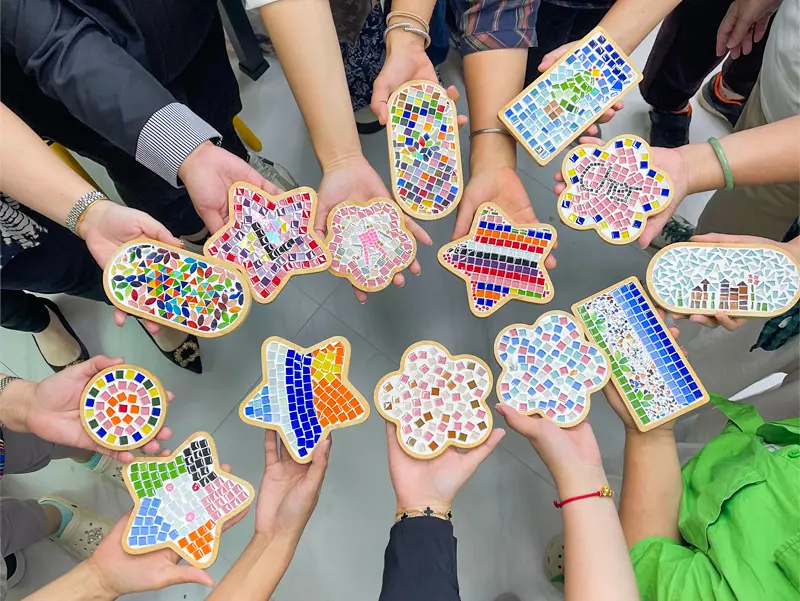
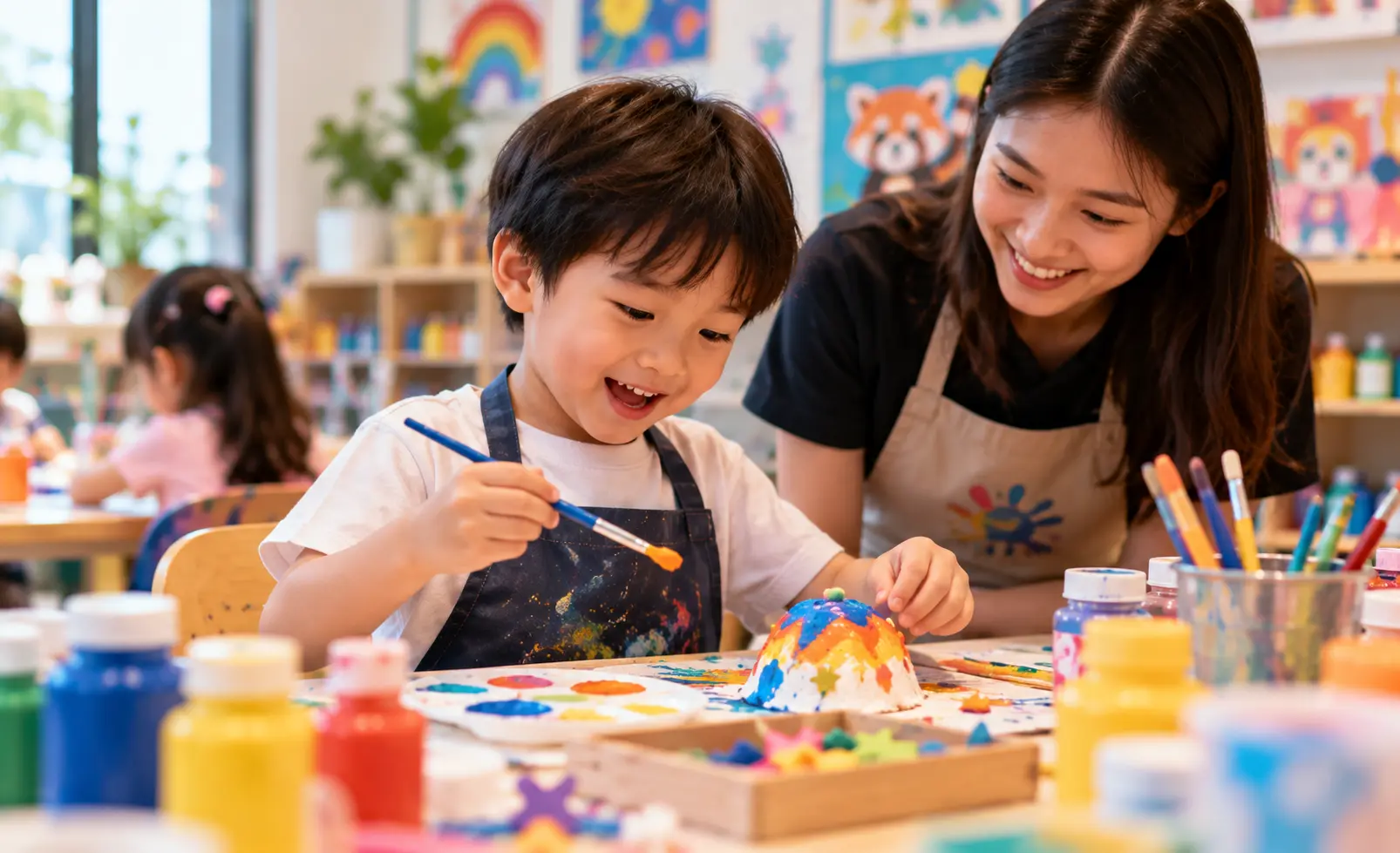
If you're choosing a first new activity deliberately — as a way of rebuilding your child's willingness to try things generally, rather than because you particularly want them to do that activity — the choice matters. The ideal first attempt has four properties: no prior skill assumed, no correct outcome, no familiar audience, and something to take home at the end.
That last one does more work than parents expect. A child who leaves with a finished object is carrying physical proof that the thing they predicted would go badly produced something instead. That's a far more persuasive argument than anything you could have said in the car beforehand.
Open-ended creative sessions fit this shape well, which is part of why they're often used as a re-entry point for cautious children. At Art Journey there's no sample to copy, no marking, no comparison between children's work, and every child finishes with something — regardless of how it turned out. Sessions are booked individually, so nothing about a first visit implies a second one. Whether you use us or anything else, those are the properties worth looking for.
If your child's reluctance shows up more as a settled belief about themselves than as caution about a specific activity, our related guide on what to do when a child says they're not good at anything covers that pattern in more depth. And for the studio-side view of how a low-pressure creative environment supports children who hold back, see how art workshops build confidence.
Some caution is temperament, not a problem to solve. A proportion of children are simply slower to warm to new situations, and stay that way into adulthood — often becoming thoughtful, observant adults who look before they leap. The goal isn't to convert a cautious child into an enthusiastic one. It's to make sure caution doesn't harden into avoidance of everything unfamiliar.
If avoidance is widening, it's worth a conversation. Occasional reluctance is ordinary. But if your child is steadily withdrawing from things they previously enjoyed, refusing school or social situations, or the refusals are accompanied by distress, that's worth raising with your child's school counsellor or GP rather than managing alone. That isn't an alarming step — it's the same instinct that made you read this in the first place.
One session, booked on its own. No term, no grading, no sample to copy, and something finished to take home. If your child would rather just watch the first time, that's genuinely fine with us. Ages 4–12, open daily 10am–9pm at Plantation Plaza, Singapore.
Book a Single SessionIn most cases the refusal is a prediction rather than a preference. Your child has quickly imagined themselves doing the activity, imagined it going badly, and declined based on that simulation. Four factors usually drive it: how many people will see them struggle, whether they'll be stuck with it, whether they'll be compared to others, and whether they can leave if it's awful. Lowering any one of these often changes the answer.
Forcing a reluctant child into a high-stakes first experience usually confirms their original prediction and makes the next refusal firmer. A more effective approach is to break the attempt into smaller steps — watching with no expectation, handling the materials, trying privately with you, then a single session among strangers. Each step produces evidence that contradicts the prediction without requiring a leap.
Encouragement argues about how enjoyable the activity is, while your child is worried about what happens to them if it goes wrong. The two aren't addressing the same question. Statements like "you'll love it" can also raise the stakes by making enjoyment an obligation — now not enjoying it means disappointing you, which is one more thing that can go badly.
They raise the value of the activity but leave the underlying stakes untouched, which is why the required reward tends to grow each time. Lowering a stake — removing the term commitment, choosing a setting with no familiar classmates, naming an exit in advance — usually works better and doesn't need escalating on the next occasion.
Look for four properties: no prior skill assumed, no correct outcome to fall short of, no familiar peers present, and something finished to take home. The take-home element matters more than parents expect — it gives the child physical evidence that the thing they predicted would go badly produced something instead. Open-ended creative sessions fit this shape well, as do single-session formats with no enrolment attached.
Yes. A meaningful proportion of children are naturally cautious and stay that way, often becoming observant, considered adults. Caution itself isn't a problem to fix. The aim is simply to prevent it from hardening into avoiding anything unfamiliar — which is why lowering stakes works better than pushing.
Occasional reluctance about new activities is ordinary. Consider speaking to your child's school counsellor or GP if avoidance is widening rather than narrowing — withdrawing from activities they previously enjoyed, reluctance to attend school or social situations, or refusals accompanied by real distress. Early conversations are always reasonable and rarely mean anything is seriously wrong.