






In January 2025, MOH, MOE, and MSF jointly launched Grow Well SG — Singapore's national health initiative that, among other things, set official screen time limits for children by age group. By January 2026, those rules extended into secondary schools, banning smartphones not just during lessons but throughout the entire school day. If you're a Singapore parent trying to figure out what the guidelines actually say, whether your family is within them, and — critically — what to do instead of screens: this guide is the practical, honest answer.
Most Singapore parents know screens are an issue. Fewer know the specific limits the government recommends — and how far their child's current usage actually sits from them. Here are the official MOH guidelines under Grow Well SG, as they stand in 2026:
A child aged 8 who uses their tablet for 3 hours on a school day — even entirely for "educational" games — is exceeding the recommended recreational limit. The 2-hour rule for ages 7–12 excludes schoolwork, meaning YouTube, games, social apps, and streaming all count toward it, not the homework done on the school-issued iPad.
The gap between what most Singapore children actually use and what Grow Well SG recommends is significant. A 2025 Ministry of Digital Development and Information survey found that a majority of children exceeded MOH's recommended daily screen time. Grow Well SG isn't fringe guidance — it reflects a genuine national concern.
The challenge for most parents isn't understanding the limits. It's the practical question that follows: if not a screen, then what? Here are 15 activities that genuinely hold a child's attention — organised by type so you can match the mood of the day.
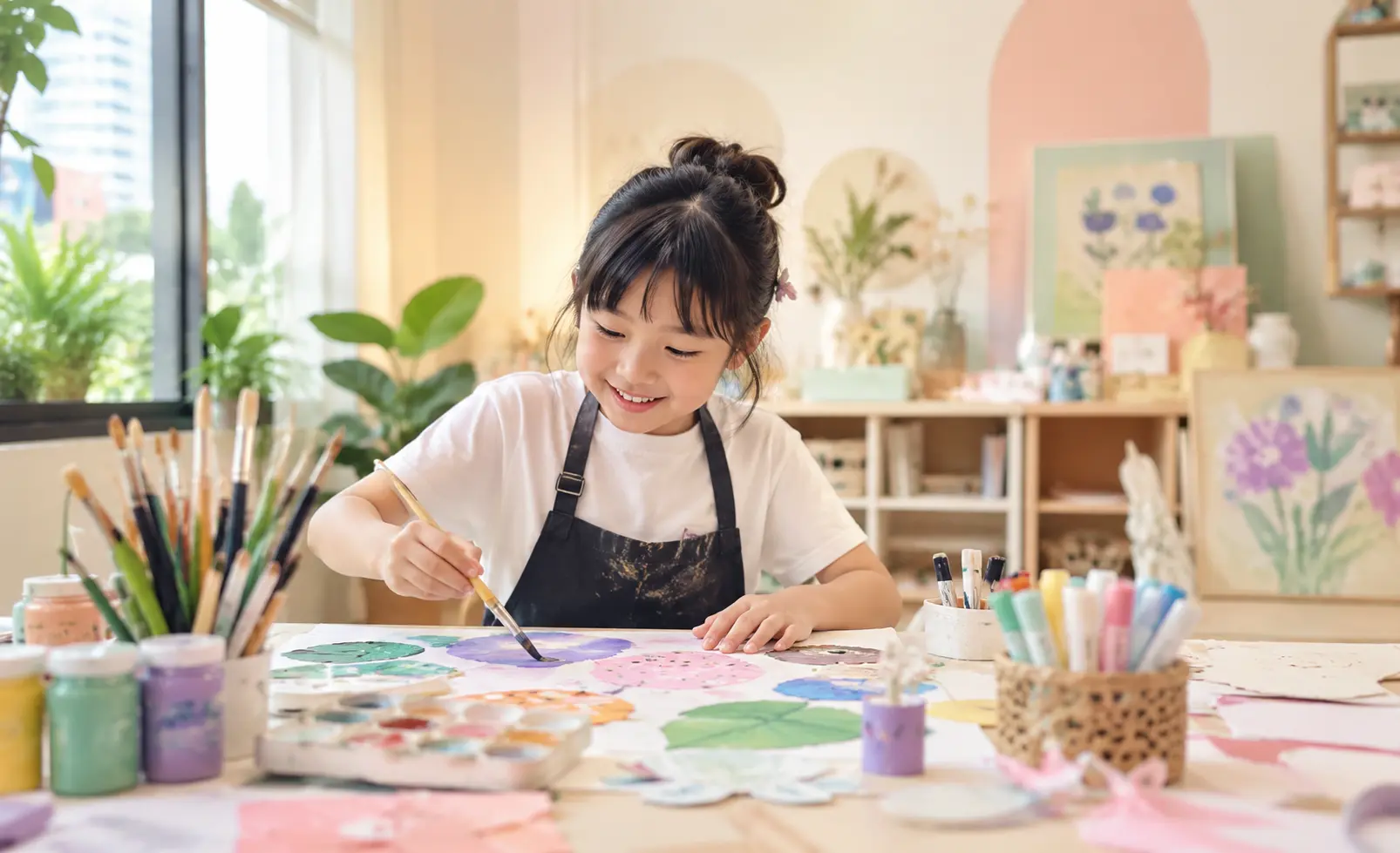
Real stretched canvas, acrylic paint, independent creative decisions, and a finished piece taken home. Art Journey's canvas painting sessions are structured creative experiences that hold children's attention for 90–120 minutes — typically longer than most other screen-free alternatives — because the child is making genuine creative choices throughout.
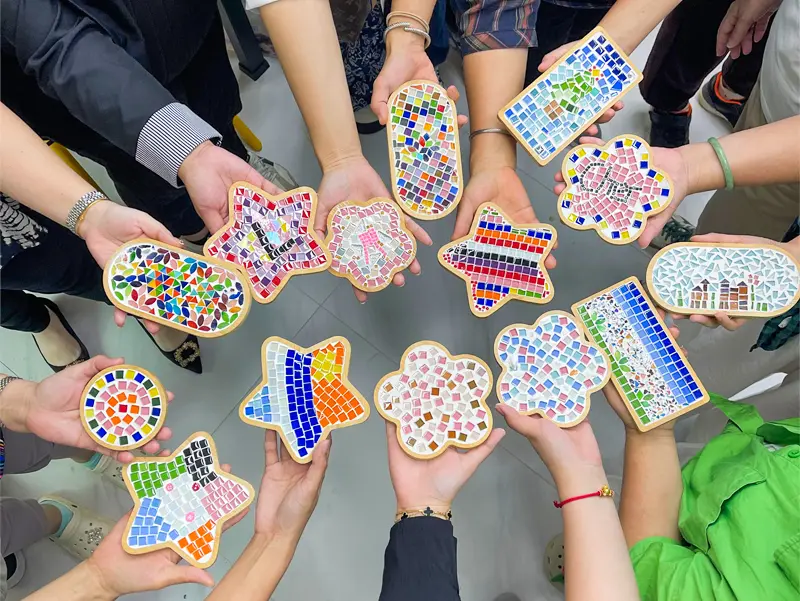
Tile-by-tile decision-making over 90+ minutes. Mosaic art is the activity parents most frequently describe as the one that finally got their fidgety child to sit still — the constant stream of small decisions (which tile next, what colour, which pattern) keeps the brain engaged without passive consumption. The finished coaster or tile piece is genuinely display-worthy.
Clay and air-dry clay (from Daiso at $2 per pack) are among the most absorbing materials for children who normally reach for screens when bored. The three-dimensional, tactile nature of clay engages different neural pathways from flat drawing or painting — children who are resistant to most creative activities often take to clay immediately. Clay sculpting at Art Journey provides guided structure; home clay sessions require only a $2 Daiso pack and a kitchen table.For children who want to keep what they make, pottery painting at Art Journey is the version that survives — the child paints a ready-made ceramic cup or plate and it goes into the kiln, so the finished piece is something they will actually drink from rather than something that cracks on a shelf.
The peel-and-sprinkle process of sand art is particularly effective for younger children (ages 3–7) whose screen time limits are tightest under Grow Well SG. It requires no drawing skill, produces a vibrant finished card or picture, and takes 20–30 minutes — making it ideal for filling a gap between meals or activities without defaulting to a device.
Save delivery boxes. Give your child masking tape, scissors, and markers. Do not give instructions. What emerges from an afternoon of unguided cardboard construction — houses, spaceships, robots, shops, entire cities — is consistently more creative and more sustained than anything a screen-based activity produces in the same time. This is not a craft project. It's engineering with free materials.
A dedicated shelf at child height with crayons, paper, paint, and glue — visible and accessible at all times — produces a measurable difference in screen-free creative time. Children who can reach art supplies without asking a parent engage with them spontaneously, throughout the day, in short bursts that add up to significant creative time. Setup costs under $45. For the full guide, see our home art corner setup guide.
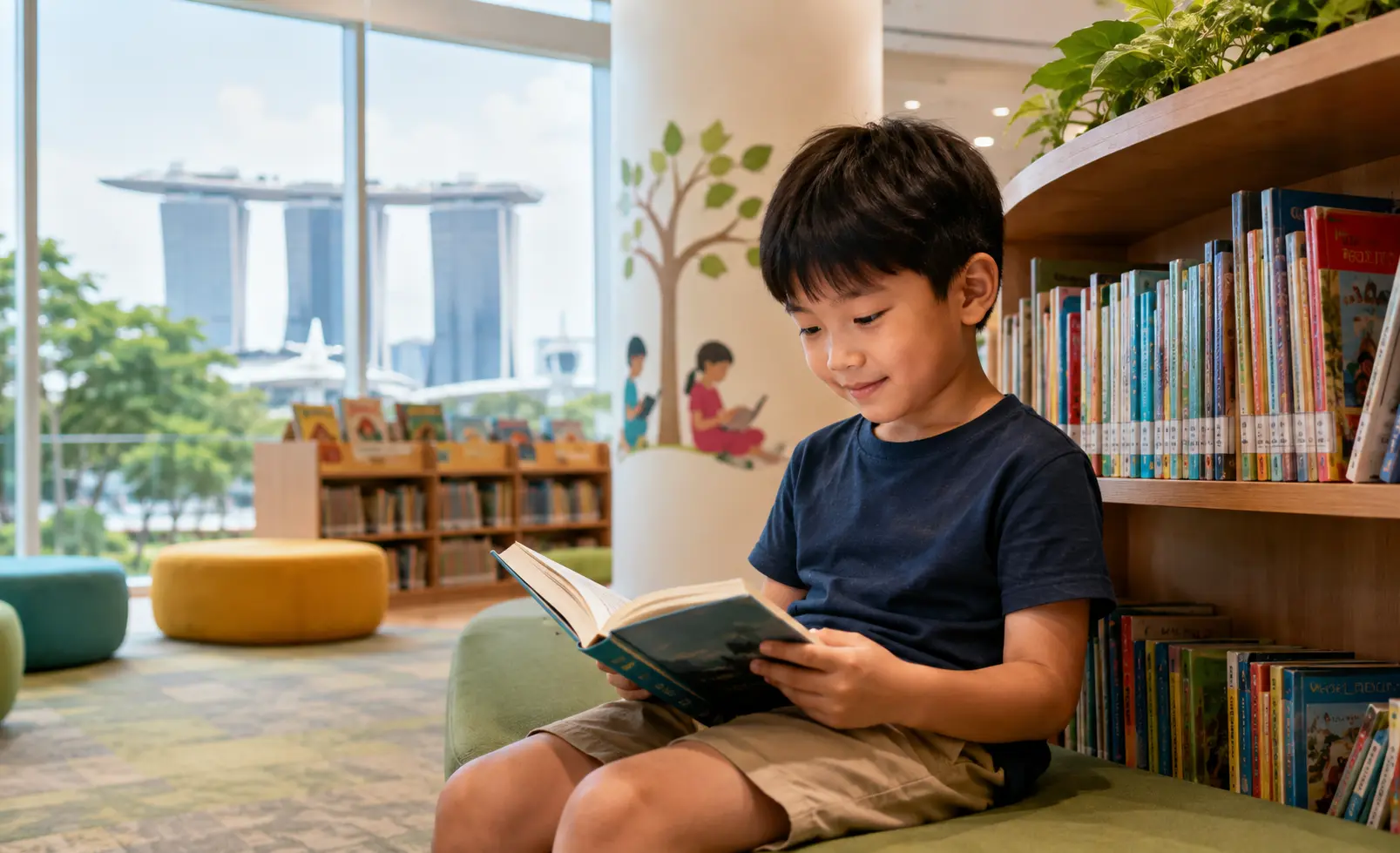
Singapore's National Library Board runs 27 public libraries, all free to enter, with extensive children's sections, storytelling programmes, and craft workshops during school holidays. The libraries are significantly underused by many families — and entirely screen-free by default. A weekly library visit replaces 1–2 hours of recreational screen time with reading, browsing, and discovery. The NLB Mobile app lets you place holds and find what's on near you.
Reading print books produces different cognitive outcomes from reading the same content on a screen — deeper comprehension, better retention, and greater imaginative engagement. Building a home reading habit alongside Grow Well SG's screen limits isn't just a nice idea: it directly fills the time that devices were occupying. Start with 20 minutes before bedtime — within Grow Well SG's "no screens 30 minutes before bed" recommendation — and let it expand naturally.
Tengah Eco Walk, Botanic Gardens, MacRitchie, Southern Ridges, or even the nearest community park. Walk slowly. Stop often. Draw what catches your child's attention — a leaf, a bird, the pattern on a tree trunk. No instructions, no "that's wrong." Just looking and responding. Children who draw from observation regularly develop better visual attention, spatial reasoning, and patience than those who don't. And Singapore's green infrastructure makes this genuinely possible year-round, early morning before the heat peaks.
Unstructured physical play — climbing, running, digging, making up games — is classified by Grow Well SG as one of the core activities that screens displace. Singapore's community playground network is extensive and largely free. The goal isn't organised sport — it's unstructured play with other children, which builds social skills, physical resilience, and creative imagination in ways that structured activities cannot. Go without a schedule. Leave when they're tired.
A single A4 sheet, no scissors, no glue, and a YouTube tutorial watched once for the starting technique — then put away. Origami is one of the few activities that directly develops spatial reasoning (the ability to mentally rotate and manipulate three-dimensional forms), which underpins mathematics, engineering, and visual art. Children who struggle with classroom spatial tasks often find a physical, tactile route to the same skill through paper folding. Intermediate origami is genuinely challenging for a 10-year-old.
A child who helps make dinner is a child who is not watching YouTube. More than that: cooking involves measuring, sequencing, cause-and-effect reasoning, and sensory engagement that develops practical intelligence in ways most enrichment classes don't. Start with something simple — scrambled eggs, fried rice, simple cookies. Let them make the decisions (how many eggs? How much salt?). The goal isn't a perfect result — it's the process of doing something real with their hands, with you, in real time.
A well-chosen board game (Catan Junior, Ticket to Ride, Codenames, Sushi Go, Dixit, Forbidden Island) replaces recreational screen time with social strategy, creative thinking, and genuine family conversation. The investment is one-time — a good family game lasts years. Singapore's board game café scene (Meeples, One Up, Games Haven) also offers a social, public screen-free environment if you want to try before you buy.
Give your child a blank notebook and a simple prompt: "Write a story about the strangest animal that ever lived." The child writes the story (however short) and illustrates each page. This combines literacy, visual creativity, and narrative thinking in one self-directed activity. Children who do this regularly develop stronger writing fluency and more confident creative voice than those who only write for school assessments. No technology, no materials beyond paper and pencil.
Singapore's CC and RC networks run free or heavily subsidised programmes for children throughout the year — craft, sports, music, cooking, and more. These are funded specifically to provide community-based alternatives to screen time and are astonishingly underused by many families. Check your nearest CC's notice board or website. Many programmes cost $5 or less per session, run on weekday evenings and weekends, and include children of mixed ages from your own neighbourhood.
Making the transition practical: Grow Well SG doesn't expect families to eliminate screens overnight — it asks for gradual, sustainable reduction toward the recommended limits. The most effective approach is to remove one recreational screen session per day and replace it with one physical activity from this list. Within two weeks, most families find the new activity becomes the child's default preference — not because screens have been banned, but because something genuinely engaging replaced them.
For more on managing the shift during school holidays specifically, see our guide on how to keep kids creatively busy during the school holidays.
Art Journey sessions run 90–120 minutes — enough to genuinely replace a morning of recreational screen time with something your child will talk about for the rest of the day. Canvas, mosaic, clay, figurines, sand art. Open daily 10am–9pm. Ages 3+.
Book a SessionGrow Well SG is a multi-ministry national health initiative launched in January 2025 by MOH, MOE, and MSF. Its screen time guidelines recommend no screens for children under 18 months; under 1 hour per day for ages 18 months to 6 years; and under 2 hours of recreational screen time per day for children aged 7–12 (excluding schoolwork). From January 2026, secondary school students must store smartphones throughout the entire school day, not just during lessons.
No. The 2-hour recreational screen time limit for ages 7–12 specifically excludes schoolwork on PLDs (Personal Learning Devices). YouTube, games, streaming services, and social apps all count toward the recreational limit. A child who uses their school-issued iPad for homework and then watches 2 hours of YouTube has exceeded the recommended recreational limit.
For the youngest age group (under 1 hour/day limit), activities that engage both hands and imagination work best: clay and playdough, sand art, simple painting, cardboard box play, outdoor playground time, and reading physical books together. These absorb attention for extended periods without any screen involvement and align directly with the Grow Well SG emphasis on physical activity, creative play, and family interaction.
The most effective approach is replacement, not removal. Banning screens without offering a genuinely engaging alternative creates resistance. Identify one recreational screen session your child currently has (morning YouTube, after-school gaming, evening tablet time) and replace it with one activity from this list — ideally something with a tangible finished output (a painting, a clay figure, a completed puzzle) that gives the child something to show for the time spent.
Yes — many. NLB library visits are free, including all holiday programmes. NParks runs subsidised nature workshops. Community Centres offer free or low-cost programmes for children throughout the year. Outdoor playground time, origami, illustrated storytelling, and cardboard engineering are all free. The 15 activities in this guide include a mix of free, low-cost ($2–10), and studio options ($15–40 per session).
Art workshops directly address several areas that Grow Well SG identifies as being displaced by screens: physical activity (hands-on making), social interaction (group sessions), creative play, and focused attention. A 90-120 minute art session at a studio like Art Journey replaces a typical recreational screen session with something that produces a tangible finished artwork — giving the child a concrete sense of achievement rather than the passive consumption that recreational screen time typically provides.
The official guidance is published on the MOH website at moh.gov.sg/staying-healthy/growwellsg. It includes the full screen use guidelines for children aged 0–12, a parent summary guide, and links to the related Screen Smart From The Start initiative launched in May 2026, which provides additional digital habit resources for families.