








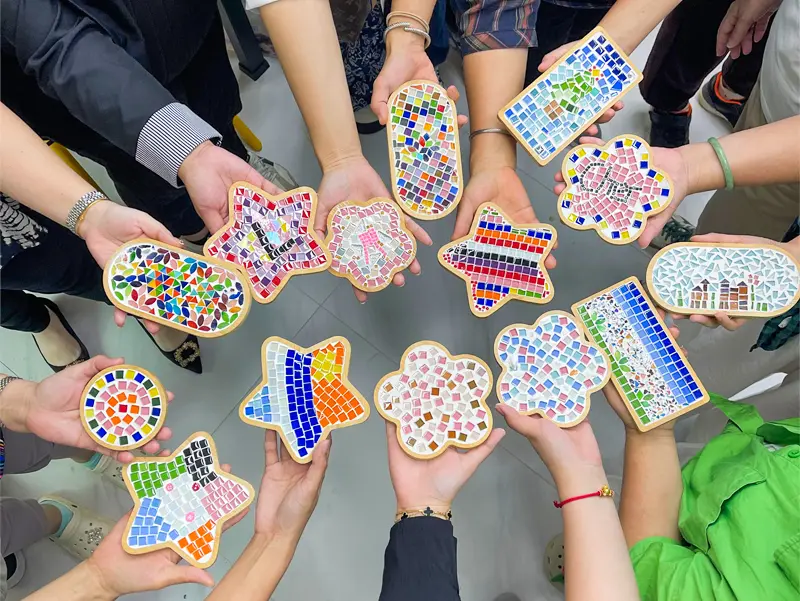

If you have a child between 3 and 12 years old, you have a pile. Maybe it's in a corner of the study. Maybe it's stacked on a shelf. Maybe it's spilling out of a box under the bed. Paintings, drawings, mosaic coasters, clay figurines, collages, sand art — an ever-growing collection of things your child made and is very proud of. And now you're looking at this pile thinking: What do I actually do with all of this?
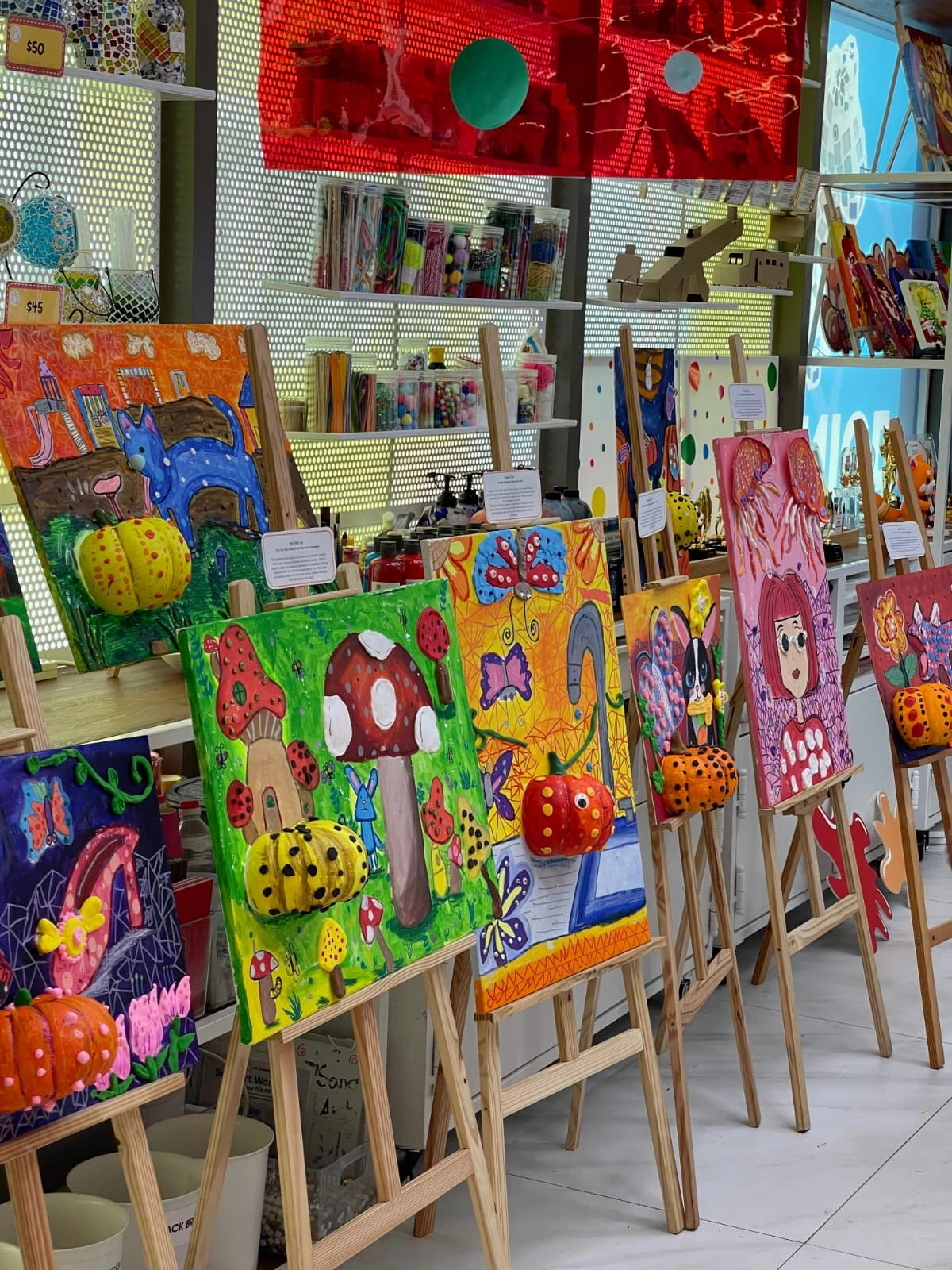
You can't keep everything — not in a Singapore flat. But throwing it all away feels wrong, especially when your child watches you do it. The answer is a system: a practical, guilt-free approach to sorting, displaying, preserving, gifting, and (yes) letting go. Here are 7 strategies that actually work.
Dedicate one wall space in your home — the hallway, the child's bedroom wall, or the space above the dining table — as the family "gallery." Hang a length of string or wire with mini pegs, or use removable adhesive strips to display 5–8 pieces at a time. When a new piece goes up, an old one comes down. This gives your child the thrill of seeing their work displayed while naturally limiting how much stays out.
The rotation is the key. It teaches children that work has a display season — just like a real gallery — and that making space for new creations is part of the creative process.
This is the single most important habit in this entire guide. Before any artwork is recycled, gifted, or stored, take a photo. Use your phone, natural light (near a window), and a plain background (a white wall or floor). Photograph the front, and if there's writing or a date on the back, photograph that too. Over time, you build a complete visual archive of your child's creative development — without the physical storage burden.
Create a dedicated album on your phone labelled by year: "[Child's name] Art 2026." At the end of each year, you have a digital gallery of everything they made. Some parents compile these into a yearly photobook (Chatbooks, Blurb, or Photobook Singapore make this easy and affordable) — a single slim book that replaces a box of originals.
Every few months (or at the end of each school term), sit down with your child and sort the artwork pile into three categories:
Box 1 — Keep Forever (maximum 5 pieces per sort). The truly special ones. The first self-portrait that actually looks like a face. The painting from the holiday when they were 4. The mosaic coaster they made for grandma's birthday. These go into long-term storage (more on that below). Limiting to 5 per sort keeps the "forever" box from growing uncontrollably.
Box 2 — Gift or Repurpose. Artwork that's nice but not irreplaceable. These become gifts for grandparents, cards for relatives, wrapping paper (large paintings work brilliantly as gift wrap), or decorations for the child's room. Giving art a second life feels better than binning it.
Box 3 — Let Go (after photographing). The everyday drawings, the half-finished pieces, the school worksheets with a small drawing in the corner. Photograph them, thank your child for making them, and recycle. This is the hardest part for parents — but your child will handle it better than you expect, especially if they participated in the sorting.
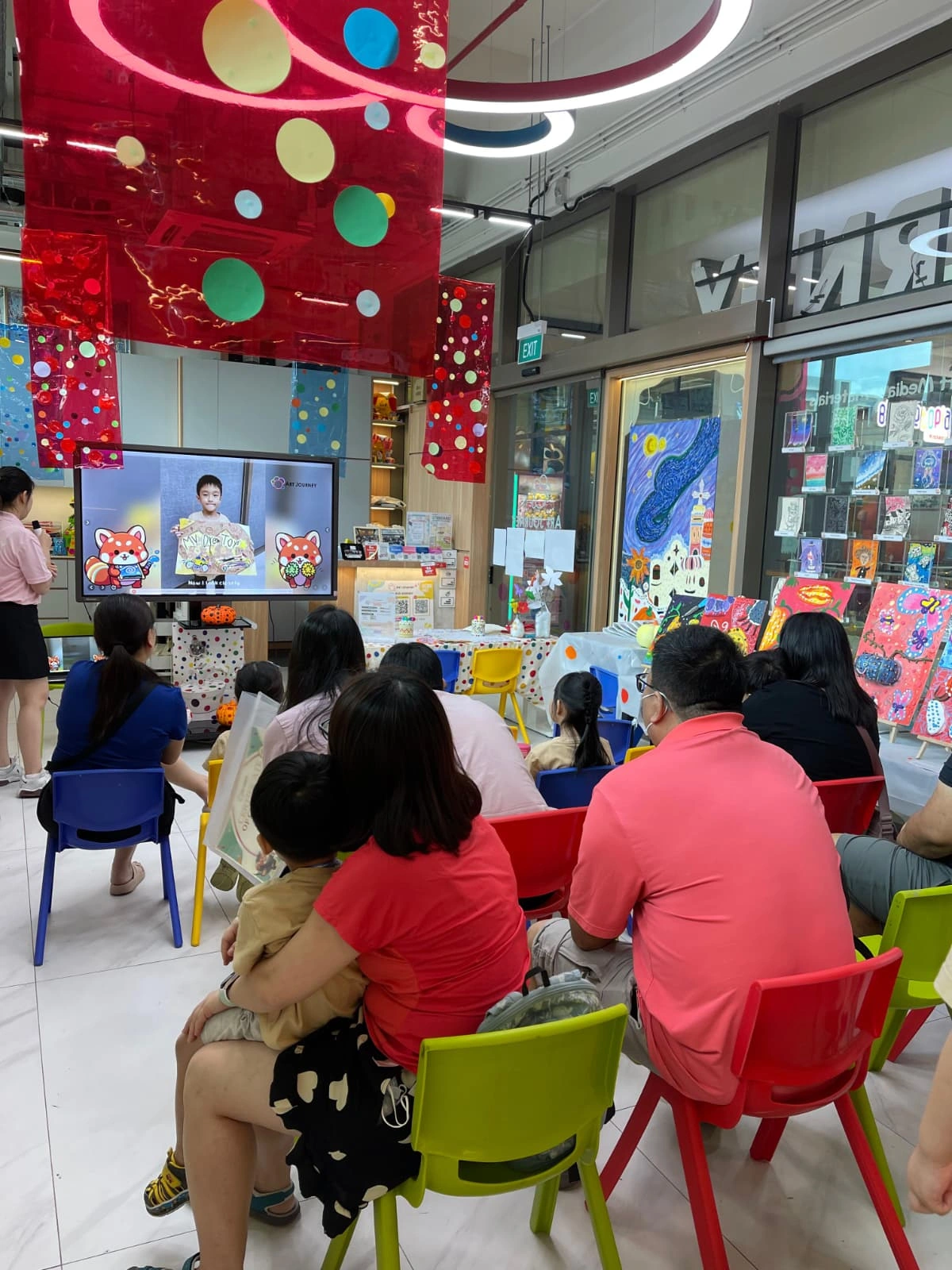
Grandparents, godparents, and favourite aunties are the perfect recipients for children's art. A canvas painting from Art Journey wrapped in brown paper with a ribbon becomes a Christmas or birthday gift that grandparents display for years. A mosaic coaster goes on their coffee table. A hand-drawn card with a personal message gets kept in a drawer for decades.
This approach solves two problems at once: it reduces your pile and it gives the artwork a meaningful second life. When your child sees their painting hanging in grandma's living room during Chinese New Year, the pride is enormous — and it teaches them that what they create has value to others, not just to them.
One professionally framed piece of your child's art on the wall carries more emotional weight than fifty pieces stacked in a box. Select one or two pieces per year — the ones that make you stop and smile — and have them framed properly. Display them alongside your family photos and purchased art. This sends a powerful signal to your child: what you made is as valuable as what we bought.
You don't need to spend $200 per frame. IKEA has perfectly good frames in standard sizes ($1.90–$14.90). For a special piece, professional framing at shops like Frames Up, Art Frame, or local HDB framers costs $30–80 depending on size and materials.
Children's artwork doesn't have to stay "artwork." With a little imagination, it becomes something your family uses every day:
Gift wrapping paper. Large paintings on paper make beautiful, unique wrapping paper. Cut to size and wrap birthday or Christmas gifts with it. The recipient gets a gift wrapped in original art.
Book covers. Cover school exercise books or notebooks with paintings and drawings. Your child walks into school with a one-of-a-kind notebook cover they made themselves.
Placemats. Laminate a favourite drawing (most print shops in Singapore laminate A3 sheets for $2–3) and use it as a placemat. It's practical, wipeable, and makes dinner more colourful.
Digital wallpaper. Photograph your child's best painting and set it as your phone wallpaper or your family laptop screensaver. Zero storage space, maximum daily joy.
Year-end photobook. Compile all the year's photographed artwork into a single printed photobook. Services like Chatbooks, Blurb, or Photobook Singapore produce clean, beautiful books starting from $20–40. One book replaces an entire year of physical pieces.
This is the hardest strategy and the most necessary one. You cannot keep every piece of art your child produces between ages 3 and 12. If they attend one art session per week, that's roughly 50 pieces per year — 500 pieces over a decade. No Singapore flat has room for that. No parent should feel guilty about acknowledging this.
The key is the ritual. Photograph it first. Thank your child for making it. Ask if they want to keep it, gift it, or let it go. If they say "keep," put it in the sorting pile for the next quarterly review. If they say "let it go," recycle it together. Most children are far less attached to individual pieces than parents assume — especially when they know new creative experiences are coming.
The art was never about the paper. It was about the experience of making it — the focus, the decisions, the colours, the pride. That experience lives in your child's development, not in the physical object. Letting the paper go doesn't erase what it gave them.
The healthy cycle: Create art (at home or at Art Journey) → display it → photograph it → enjoy it → gift the best pieces → let the rest go → create more. This cycle keeps creativity flowing without accumulation guilt. The children who create the most are the ones whose parents have a system — not the ones whose houses are buried under artwork.
For ideas on setting up a permanent creative space at home where new art gets made regularly, see our home art corner setup guide.
The artwork children create at Art Journey — canvas paintings, mosaic coasters, painted figurines, clay sculptures — is designed to be gift-worthy, display-worthy, and worth keeping. Every session produces something your child (and their grandparents) will treasure.
Book a SessionUse the three-box system: "Keep Forever" (maximum 5 per quarterly sort — the truly special pieces that mark milestones or show genuine creative growth), "Gift or Repurpose" (nice pieces that can become gifts for grandparents or be turned into wrapping paper, placemats, or photobooks), and "Let Go" (everyday pieces that you photograph and then recycle). Involving your child in the sorting process helps them learn to curate their own work.
Large clear plastic bins (Daiso $4 or IKEA SAMLA) with silica gel packets to prevent humidity damage. Store flat pieces interleaved with acid-free tissue paper to prevent sticking. For 3D pieces (clay figurines, mosaic coasters), display on shelves rather than storing in boxes. Keep the "forever" collection to one manageable box per year.
Use natural light near a window, place the artwork on a plain white background (floor or wall), and photograph straight-on to avoid distortion. Include a photo of any writing or dates on the back. Create a yearly album on your phone. For some photos, include your child holding the artwork — years later, the combination of the art and their face is far more precious than the art alone.
Create a designated display area — a wire with clips, a string with mini pegs, or a row of matching frames. Limit the display to 5–8 pieces at a time and rotate regularly. One properly framed piece on a wall looks more intentional (and means more to your child) than twenty pieces taped randomly to the fridge. Treat your child's art with the same display care you'd give purchased artwork.
Yes — with care. Photograph every piece first, involve your child in the decision when possible, and recycle rather than bin. Most children are less attached to individual pieces than parents expect, especially when they know new creative experiences are coming. The value of art is in the making, not just the keeping. A system that cycles through create → display → photograph → let go keeps creativity flowing without accumulation guilt.
Repurpose it: use large paintings as gift wrapping paper, laminate drawings as placemats, cover school notebooks with artwork, set photographed pieces as phone wallpapers, or compile a year's worth of photos into a printed photobook. Gifting artwork to grandparents, godparents, or teachers gives pieces a meaningful second life and teaches children that their creations have value to others.
Once per school term (roughly every 3 months) works well for most families. This prevents the pile from becoming overwhelming while keeping the sorting sessions manageable. Involve your child in the process — it teaches them curation skills and gives them ownership over what stays and what goes.