




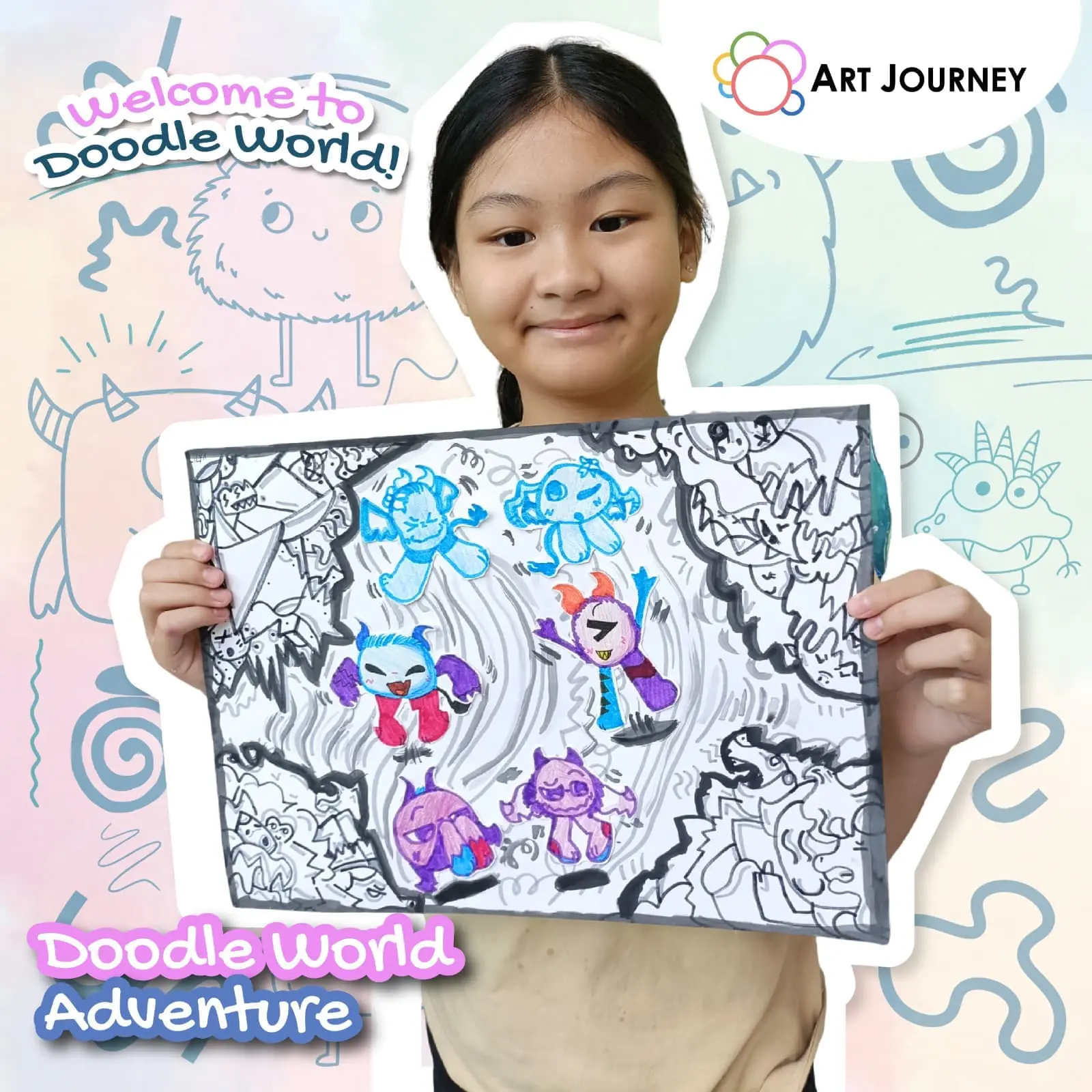







You've seen the photos on our website — children painting, building mosaics, shaping clay, holding finished artworks with big smiles. But what actually happens between the moment your child walks through the door and the moment they walk out carrying something they made? This is a look behind the scenes at how an Art Journey workshop runs — not a marketing pitch, but an honest account of the creative process that turns blank materials into finished art.
Every workshop follows a natural creative arc — from introduction to exploration to completion. The exact rhythm varies by format and age group, but the overall experience has a consistent shape that children settle into quickly, often from their very first visit.
Children are greeted by name (returning children) or with a warm welcome (first-timers). They put on an apron, find a seat, and discover the materials already laid out on the table. The studio is bright, colourful, and filled with artwork from previous sessions — which immediately signals that this is a place where creative things happen. For younger children (3–5), a parent is welcome to stay nearby. For older children, parents can head to the Art Cafe next door.
There's no formal "class start time" where everyone must be seated and silent. Children arrive, settle in at their own pace, and the session begins organically as materials are introduced.
Each workshop session has a theme — it might be drawn from nature, festivals, animals, fantasy worlds, cultural traditions, or seasonal events. The instructor introduces the theme through a brief conversation, a reference image, or a story. This isn't a lecture — it's a creative prompt designed to spark ideas. "Today we're exploring the ocean. What lives in the ocean? What colours would you use? What would your ocean look like?"
The key distinction from traditional art classes: the theme is a starting point, not a template. Every child interprets it differently. There's no model painting on the wall that everyone copies. Two children might start with the same "ocean" theme and produce completely different artworks — one full of colourful fish, the other an abstract wave of blues and greens. Both are equally right.
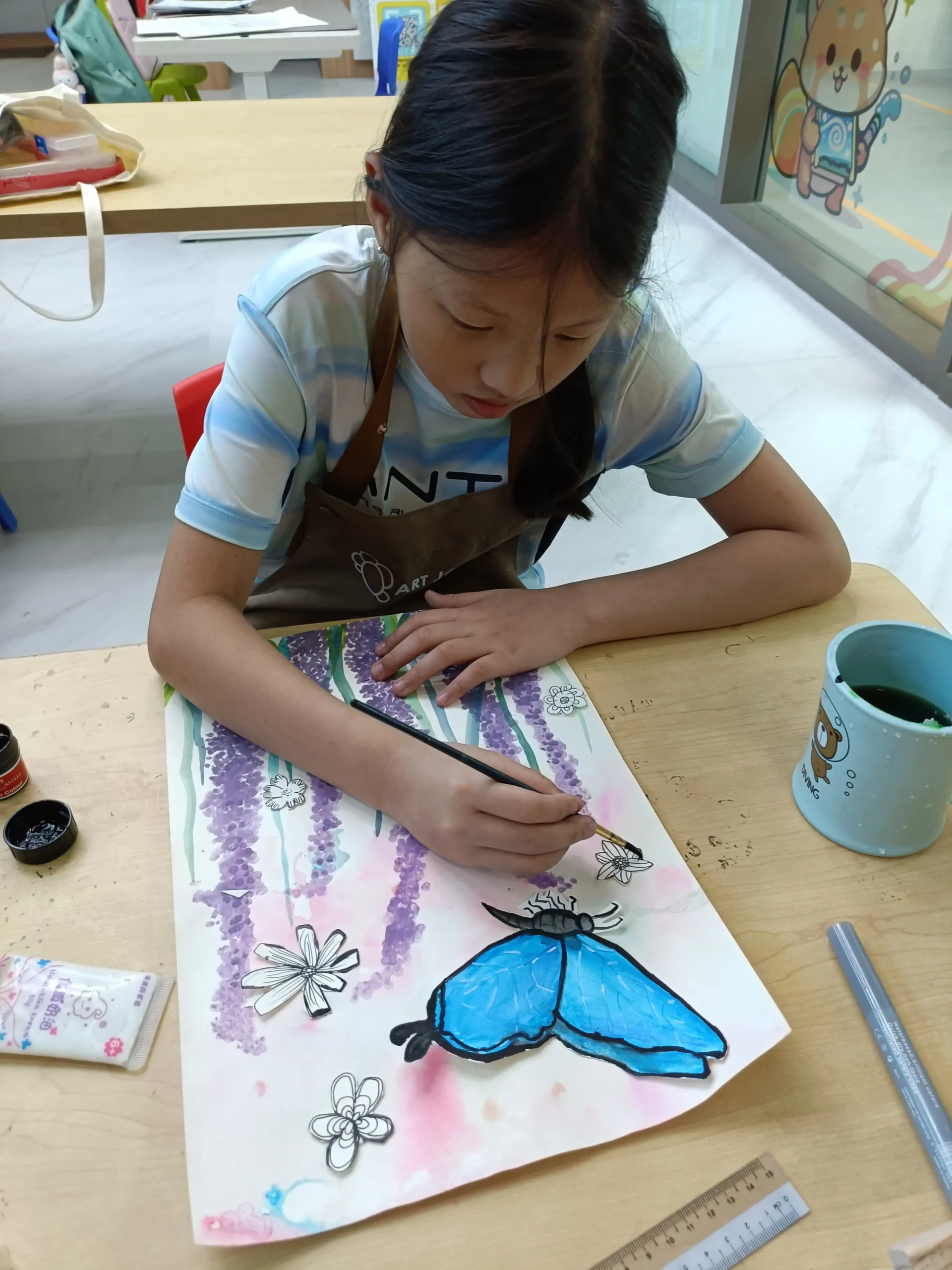
This is the longest and most immersive part of the session. Children work with their chosen materials — paint, tiles, clay, sand, mixed media — guided by the instructor but led by their own creative decisions. The instructor circulates, asking questions ("Tell me about this part of your painting"), offering encouragement ("That colour combination is really interesting"), and helping with practical challenges ("Let me show you how to make the clay stick here").
What parents often notice when they peek in: their child is deeply focused. Children who "can't sit still" at home are absorbed for 45 minutes straight. Children who said "I can't draw" are confidently shaping clay. The materials and the environment do the work of engagement — the instructor's role is to sustain it, not create it. Our blog on how art workshops build focus and patience explains the cognitive science behind this effect.
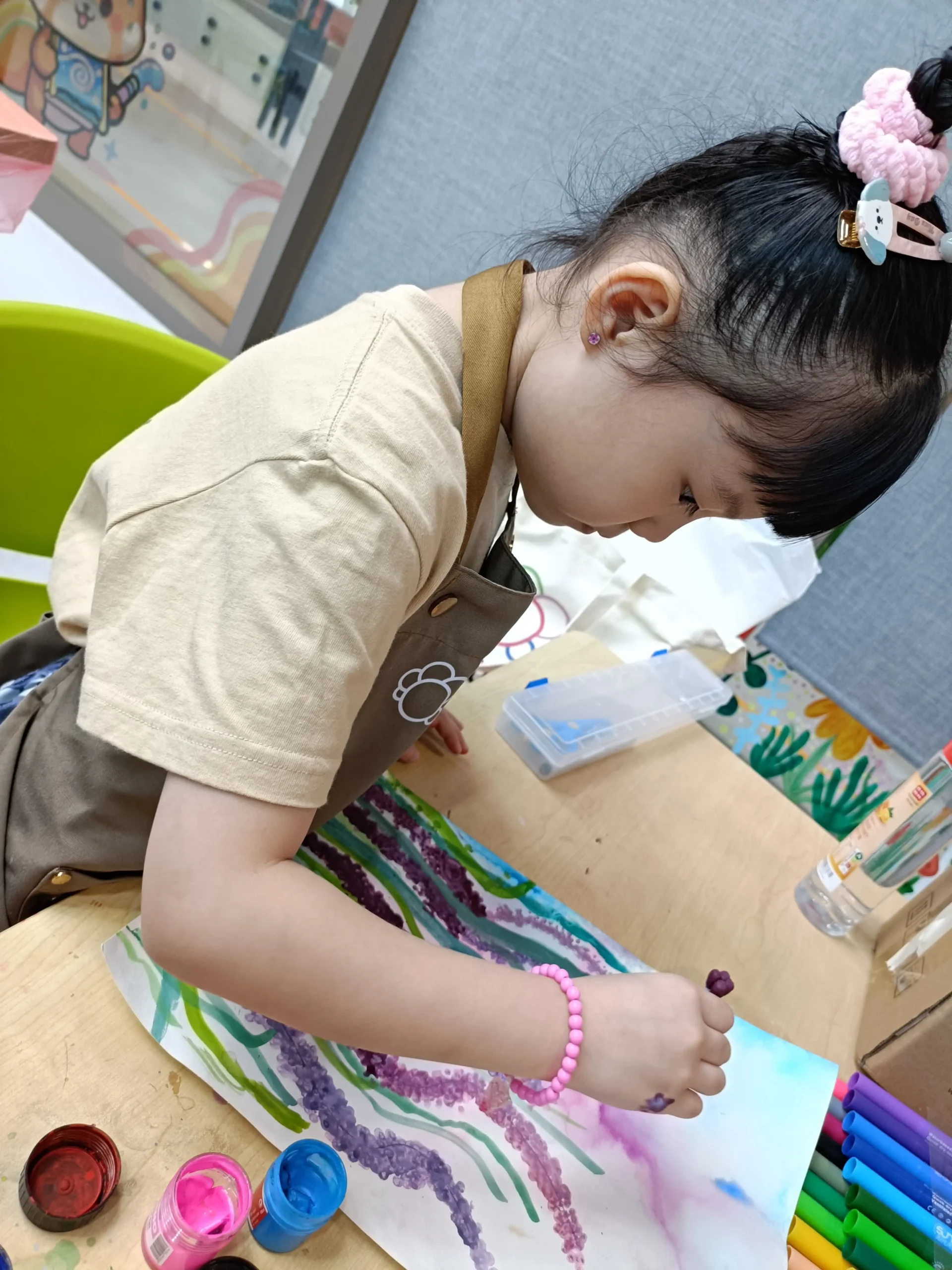
As the session moves toward completion, the instructor helps children add finishing touches — details, textures, final layers, or structural reinforcements. This phase is where children learn that art isn't just about the first burst of energy — it's about the care you put into completing something properly. A mosaic gets its grout. A painting gets its final highlights. A clay piece gets its smoothing and detail work.
For some children, this is the hardest part — they want to move on to something new. Learning to stay with a piece and finish it well is one of the most valuable skills the workshop teaches. It's delayed gratification in action.
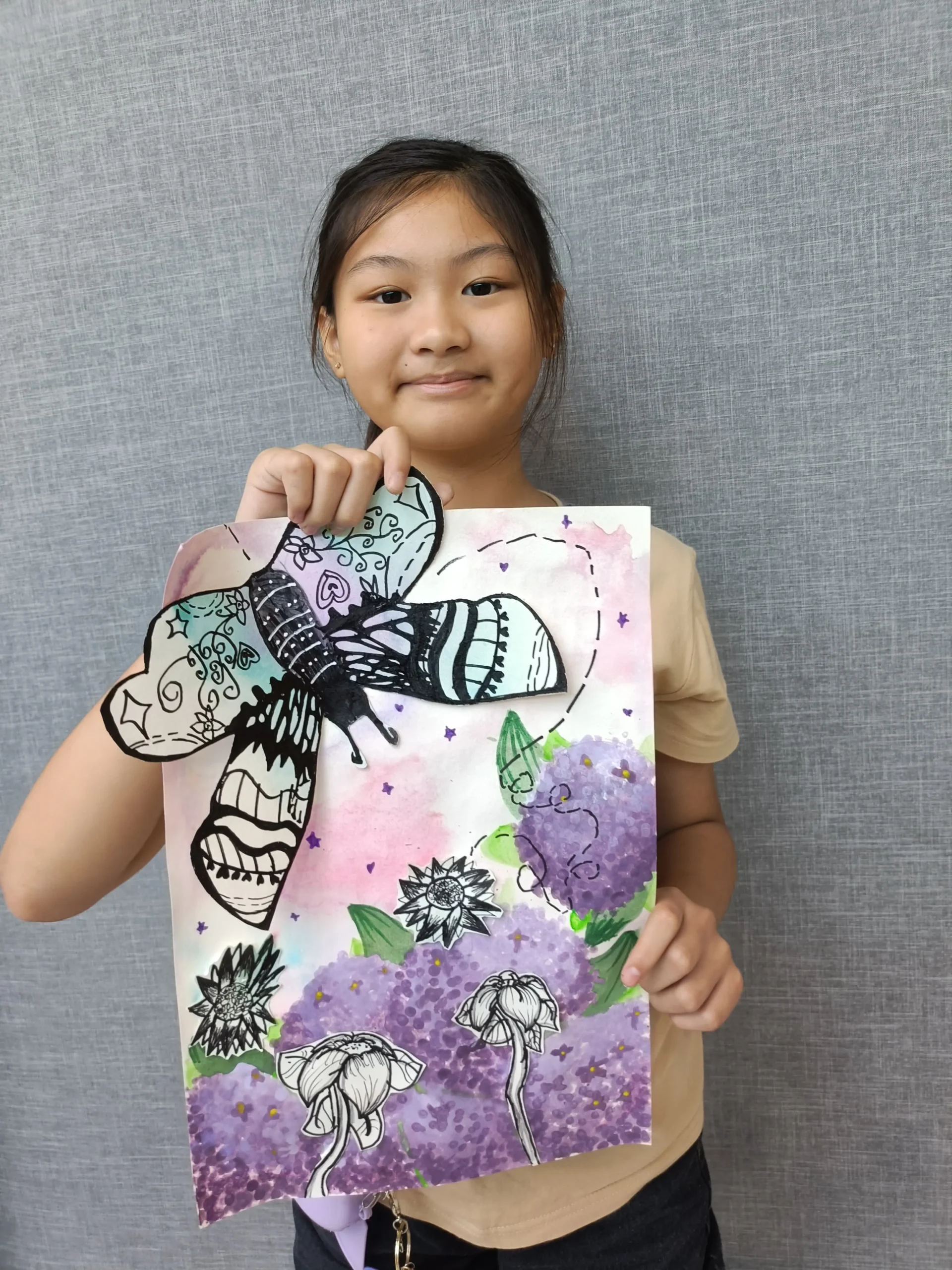
The artwork is finished. The child holds it up. There's a moment — every parent who's been through this knows it — where pride, surprise, and pure joy cross their face. "I made this." It doesn't matter whether it's a perfectly rendered canvas or a slightly lopsided clay animal. The feeling of completing something real, with their own hands, from start to finish, is what stays with them.
Children take their finished piece home the same day in most cases. Some formats that require drying time may need a short wait or a return collection. The instructor always lets you know.
Not every artwork takes the same amount of time. Some formats are designed to produce a complete piece in a single session. Others — especially those involving more complex techniques or layered processes — are paced across two sessions to give children the time to do their best work without rushing.
Themed acrylic painting on real canvas. Layering, colour mixing, and composition explored at the child's pace.
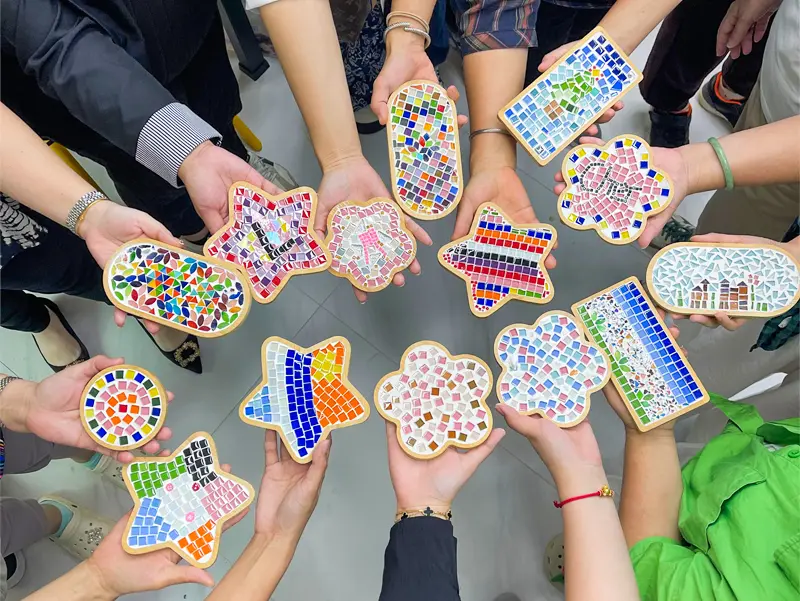
Often 2 sessionsTile-by-tile design on coasters, frames, or trays. Arrangement, adhesive work, and grouting.
Typically 1 sessionAir-dry clay shaping, detailing, and painting. Building a 3D piece from a ball of clay.
Often 2 sessionsSelecting and painting a blank figurine with fine brush detail work.
Typically 1 sessionPeeling adhesive sections and layering coloured sand into vibrant designs.
Typically 1 sessionCombining multiple materials — paint, fabric, found objects, 3D elements — into a single creative piece.
Often 2 sessionsWhy two sessions sometimes works better than one: For more complex formats, rushing to finish in a single visit can turn creative exploration into a race against the clock. Spreading the work across two sessions gives children time to step back, reflect on what they've started, and return with fresh eyes. That pause between sessions often produces better work — and it teaches children that meaningful creation doesn't always happen in one sitting.
Regardless of the format or the theme, every Art Journey workshop is guided by the same set of creative principles. These are the things that make the experience feel different from a typical art class — and they're drawn from the educational philosophies of Piaget, Montessori, and Reggio Emilia.
Children experience the workshop as fun — they're painting, building, making. They don't think about the cognitive and emotional development happening underneath. But parents see it. Here's what they commonly report:
Longer attention spans. A child who can't focus on homework for 10 minutes sits absorbed in a mosaic project for an hour. The attention muscle is being trained — it just doesn't feel like training because it's enjoyable.
Creative confidence. After a few sessions, children start saying "I want to try this" instead of "I can't do this." The shift from fear to curiosity is one of the most powerful outcomes of the Art Journey approach.
Independent decision-making. Parents notice their children making choices more confidently — not just in art, but in daily life. A child who's practised choosing colours, compositions, and materials every week becomes a child who's more comfortable making decisions.
Calmer mood after sessions. Many parents report their children are noticeably calmer, more settled, and less screen-dependent on workshop days. The focused creative engagement acts as a natural stress release.
Proudly displaying their work. When a child insists on hanging their painting on the living room wall or placing their mosaic coaster on dad's desk, it's not just about the art — it's about ownership. I made this. It matters. I matter.
For a detailed guide on what to expect at your child's first visit, see our first art workshop parent guide. And for a deeper look at how these sessions build focus and patience, read our science-backed guide on art and attention.
To understand how Art Journey's approach differs from traditional art classes, our Traditional Art vs Art Journey comparison lays out the philosophy in detail.
Book a single session and experience the Art Journey workshop firsthand. Canvas, mosaic, clay, figurines, sand art — your child picks. Ages 3+. Open daily 10am–9pm.
Book a SessionIt depends on the format. Some activities — like mosaic coasters, 3D figurine painting, and sand art — are typically completed in a single session (60–120 minutes). Others — like canvas painting, clay sculpture, and mixed media projects — may span two sessions to give children time to layer, refine, and complete their best work. The instructor always lets you know the expected timeline.
There are no templates to copy. Each session has a creative theme (e.g., ocean life, fantasy creatures, cultural festivals), but every child interprets the theme in their own way. Two children working on the same theme will produce completely different artworks. The instructor guides and supports — but never dictates what the child should create.
For formats designed as single-session activities, the instructor paces the session to ensure completion. For two-session formats, the work is stored safely at the studio between visits. Your child returns to a piece they've already started and picks up where they left off — often with fresh ideas and renewed energy.
Art Journey's approach is inspired by Piaget (child development stages), Montessori (child-led learning), and Reggio Emilia (creative exploration through environment and materials). In practice, this means children lead the creative process, instructors guide rather than direct, mistakes are treated as learning opportunities, and the experience of creating matters as much as the finished product.
Yes — especially for younger children (ages 3–5), parents are welcome to stay nearby. The on-site Art Cafe provides a comfortable spot within view of the workshop area. For older children (5+), most parents drop off and return at the end. Either approach is fine.
Art jamming is typically unguided — you're given materials and paint whatever you like. Art Journey workshops are themed and guided — each session has a creative direction, age-appropriate grouping (Young Creator 4–7, Emerging Artist 8–12), diverse materials, and instructor support. Art jamming is also available at Art Journey for families and adults who prefer a casual, self-directed experience.
Canvas painting, mosaic art, clay sculpture, 3D figurine painting, sand art, tote bag painting, mixed media, and rotating themed projects. Themes change regularly, so children who visit weekly or fortnightly always have something new to try.